Why palatability is the hidden gate
A 30-dog palatability trial costs ₹1.8 – ₹2.6L and takes 4 weeks. Founders skip it to compress timeline, then watch month-3 retention collapse.
Our data: brands that ran the trial show 14% month-3 churn; brands that skipped show 38%. The trial pays back inside the first 800 retained subscribers.
Pack architecture
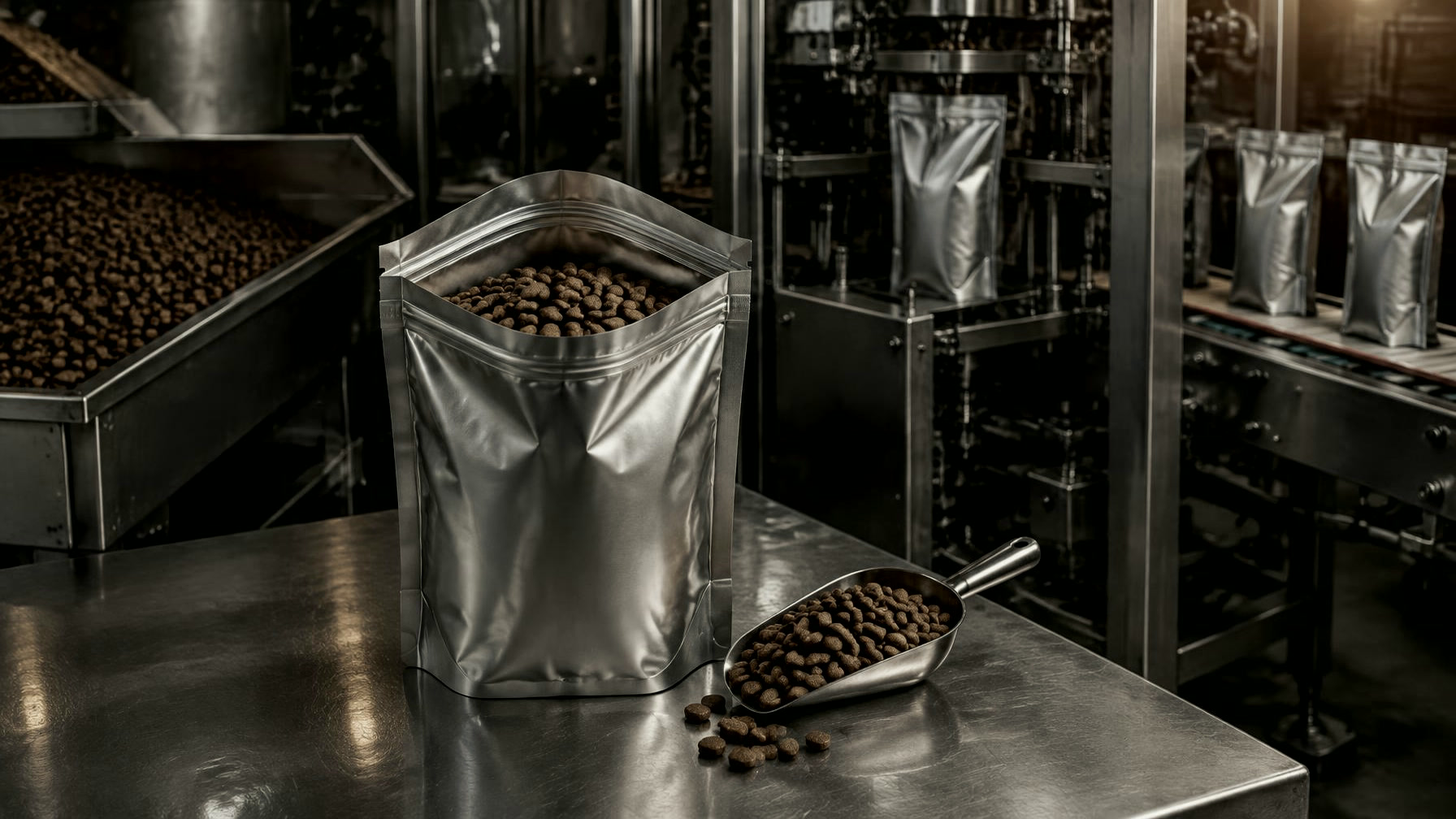
Stand-up pouch with degassing valve is the new floor in premium kibble. Adds ₹4.10 per pouch but extends shelf life materially and signals premium positioning at retail.
Multi-layer laminate is acceptable here (unlike home care) because pet-food regulations don't demand recyclable claims yet. Watch this — it will change.
- ›Kibble base (chicken / lamb / fish): ₹62 – ₹118 per kg
- ›Functional layer (palatability coating): ₹14 – ₹22
- ›Multi-layer pouch + degassing valve + zip: ₹18 – ₹26
- ›Fill, nitrogen flush, seal: ₹8 – ₹12
- ›Label + outer corrugated: ₹6 – ₹10
- ›Palatability trial amortised over first 20k pouches: ₹9 – ₹13
Extruder capacity reality
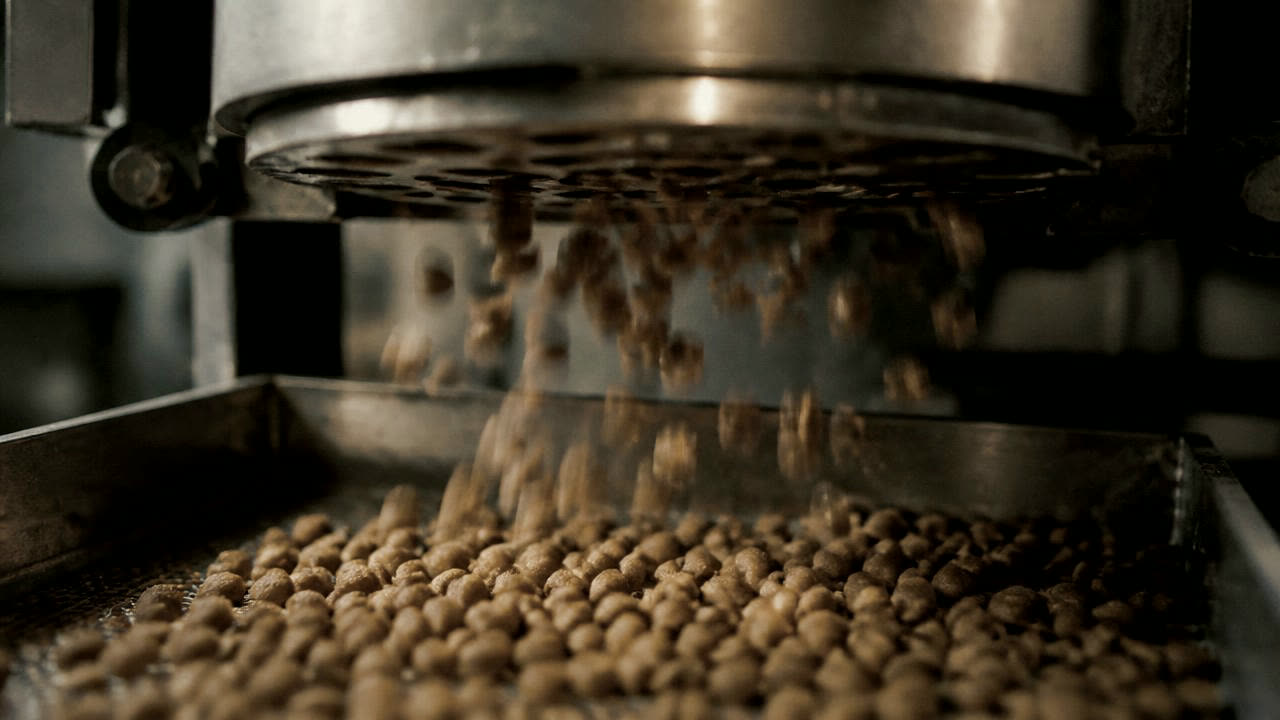
Twin-screw extruders are mandatory for premium-tier kibble — single-screw caps out at mid-tier formulations. Only 5 of 9 mapped Indian extruders run twin-screw.
Book extruder slots 12 weeks ahead of launch. Premium-tier capacity is tight through Q3 2026.
Cold-chain trade-offs
Kibble doesn't need cold-chain in distribution but does need it for inbound chicken-meal in tropical India. Brands often miss this and end up with rancid-tasting product after monsoon.
Specify chilled inbound for meat-meal raw materials and watch palatability hold across seasons.
CCSEA and label claims
Any 'tested on' or 'recommended by veterinarians' claim requires CCSEA registration. Most pilot-stage brands skip the claim and pick it up at re-launch.
If launching with a claim, budget ₹1.4 – ₹2.2 L and 14 – 18 weeks for CCSEA processing.
§ KEY TAKEAWAYS
- 01Palatability trial is the most under-bought test in pet care
- 02Degassing valve pays for itself in shelf-life claims
- 03Lock kibble extruder capacity 12 weeks ahead of launch
- 04Chill inbound meat-meal raw materials in tropical India
- 05CCSEA registration takes 14 – 18 weeks — plan if claiming
- 06Twin-screw extrusion is non-negotiable for premium tier
§ GLOSSARY
Technical jargon, acronyms and scientific terms used in this file — decoded.
- Extrusion
- Forcing dough through a die under heat and pressure to form kibble. Twin-screw extruders are the industry standard for premium pet food.
- Palatability
- Pet-acceptance score measured by two-bowl trials. Drives repeat purchase more than any nutrition spec.
- Crude protein
- Protein percentage by Kjeldahl analysis on a dry-matter basis — the headline number on a pet-food label.
- BARF
- Biologically Appropriate Raw Food — a feeding philosophy using raw meat, organs and bones; requires cold-chain logistics.
- Cold-chain
- Temperature-controlled storage and transport (typically 0–4 °C or frozen) maintained continuously from factory to consumer.