Probiotics in a gummy don't survive
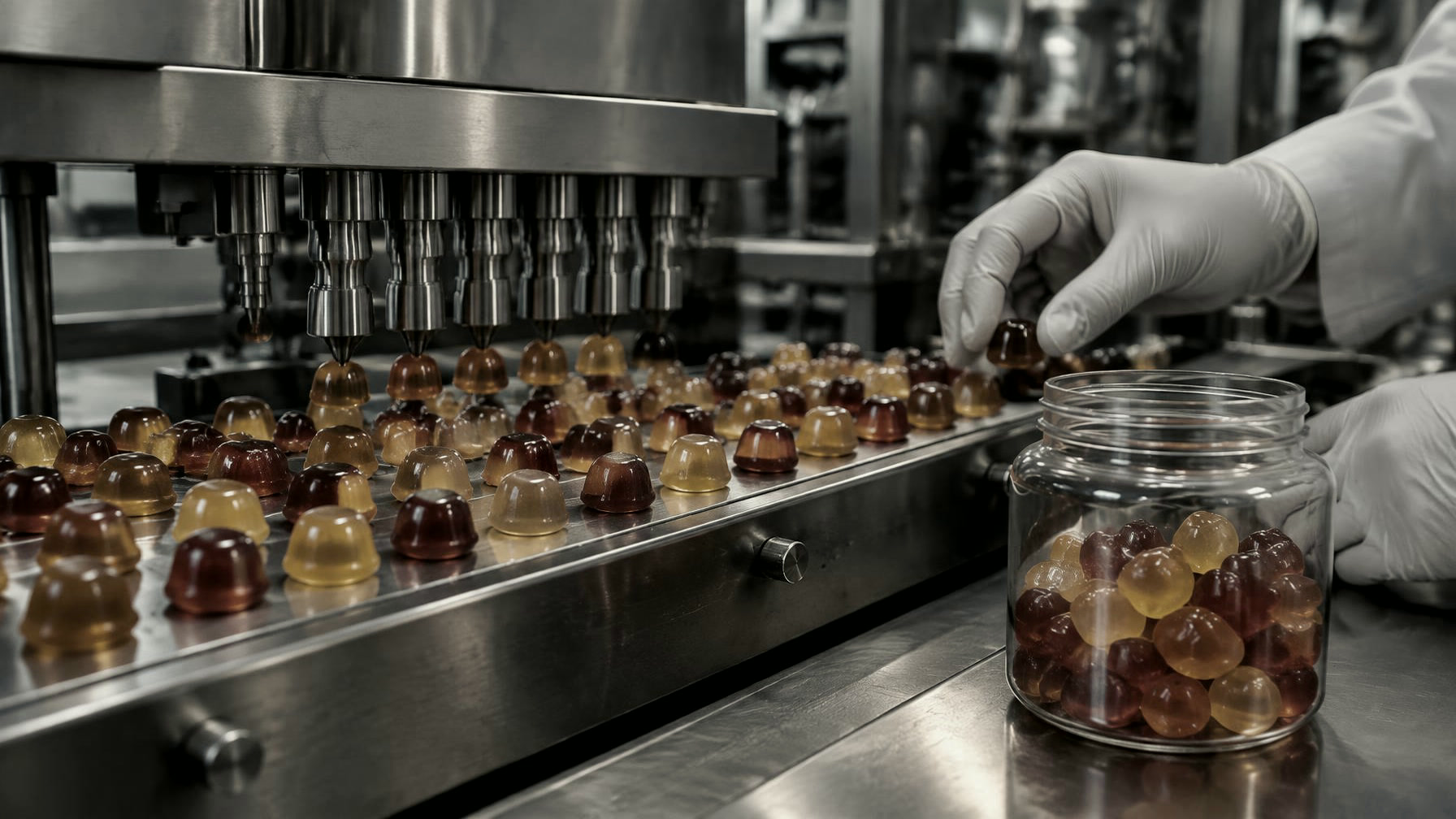
Standard gummy deposition cooks the slurry to 95 °C; live probiotics die above 45 °C. Encapsulated probiotics (Bacillus coagulans spores or microencapsulated L. acidophilus) can survive but cost 4–7× regular strains and need cool-cycle deposition.
Claims must be at end-of-life (EOL), not at manufacture. Most brands over-fortify by 3–10× at fill to deliver a 1 billion CFU EOL claim 18 months out.
Pectin vs gelatin base
Pectin gummies are vegan, heat-stable and on-trend; gelatin is cheaper and chewier. Pectin adds ₹6–12 per bottle vs gelatin.
§ KEY TAKEAWAYS
- 01Always quote CFU at EOL — manufacture-claim is a recall risk
- 02Bacillus coagulans spores survive standard deposition; lactobacilli need cool-cycle
- 03Over-fortify 3–10× at fill to deliver shelf-life claim
- 04Pectin is the consumer-preferred base despite cost premium
§ GLOSSARY
Technical jargon, acronyms and scientific terms used in this file — decoded.
- CFU
- Colony-Forming Units — the count of live, replication-capable microorganisms in a probiotic product.
- EOL claim
- End-of-Life claim — the active level guaranteed through to the last day of stated shelf life.
- Bacillus coagulans
- Spore-forming probiotic strain with high heat and acid tolerance; survives baking and gastric pH.
- Microencapsulation
- Coating probiotic cells in a polymer shell to protect against heat, moisture and gastric acid.
- Pectin
- Plant-derived gelling polysaccharide used as a vegan alternative to gelatin in gummies.