The SPF claim is the product
SPF, PA+ and broad-spectrum claims must be substantiated by in-vivo human-subject testing under ISO 24444 (SPF) and ISO 24443 (UVA-PF). Indian labs charge ₹3.8–₹5.6 L for a 10-subject panel; failure rate first-time is 25–30% which adds another full cycle.
Mineral-only formulations (zinc oxide + titanium dioxide) are easier to substantiate at SPF 30–40 but reading SPF 50 reliably requires hybrid systems with avobenzone + octocrylene or new-gen filters like Tinosorb S.
Tube and dispenser
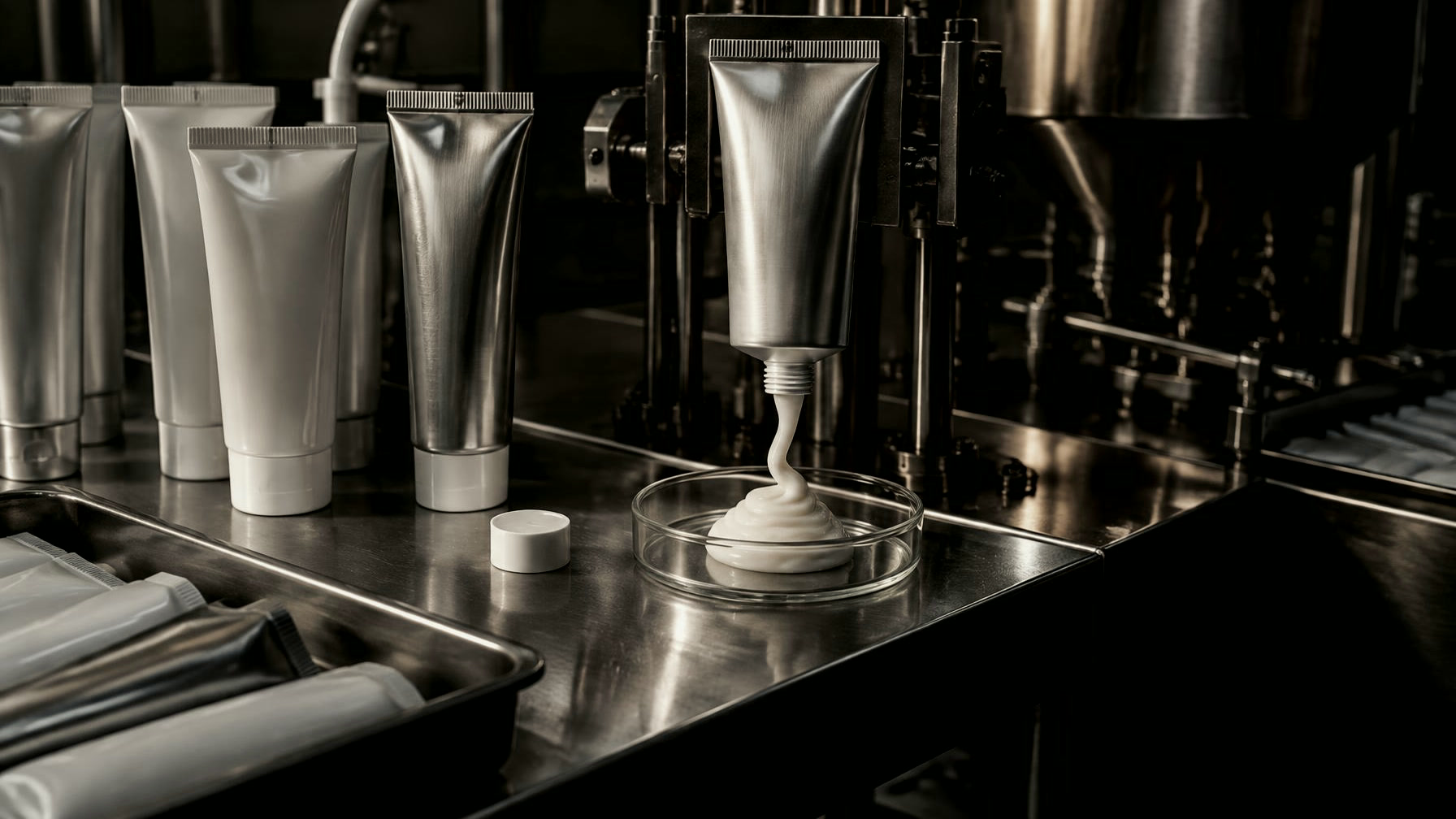
Aluminium collapsible tubes preserve sunscreen actives by blocking light fully. Plastic tubes save ₹4–6 per unit but UV-sensitive actives lose 8–15% potency over 9 months.
Tube closures: flip-cap is consumer-favourite; nozzle-cap reads premium; pump dispensers add ₹6–10.
§ KEY TAKEAWAYS
- 01Budget two in-vivo cycles, not one — first-pass failure is common
- 02Aluminium tubes protect SPF actives — plastic costs less but ages poorly
- 03Hybrid filter systems unlock SPF 50; mineral-only caps near SPF 40
- 04PA+ and UVA-PF need separate ISO 24443 testing
§ GLOSSARY
Technical jargon, acronyms and scientific terms used in this file — decoded.
- SPF
- Sun Protection Factor — multiple by which a sunscreen extends the time skin can be exposed before erythema (sunburn).
- PA+ rating
- Asia/Pacific UVA protection grade; PA+ to PA++++ scale based on Persistent Pigment Darkening test.
- ISO 24444
- Global standard for in-vivo SPF determination on human volunteers using a solar simulator.
- Avobenzone
- A widely-used UVA chemical filter; needs photo-stabilisation with octocrylene or similar.
- Broad-spectrum
- Claim that sunscreen protects against both UVA and UVB; in India must be substantiated under ISO methods.