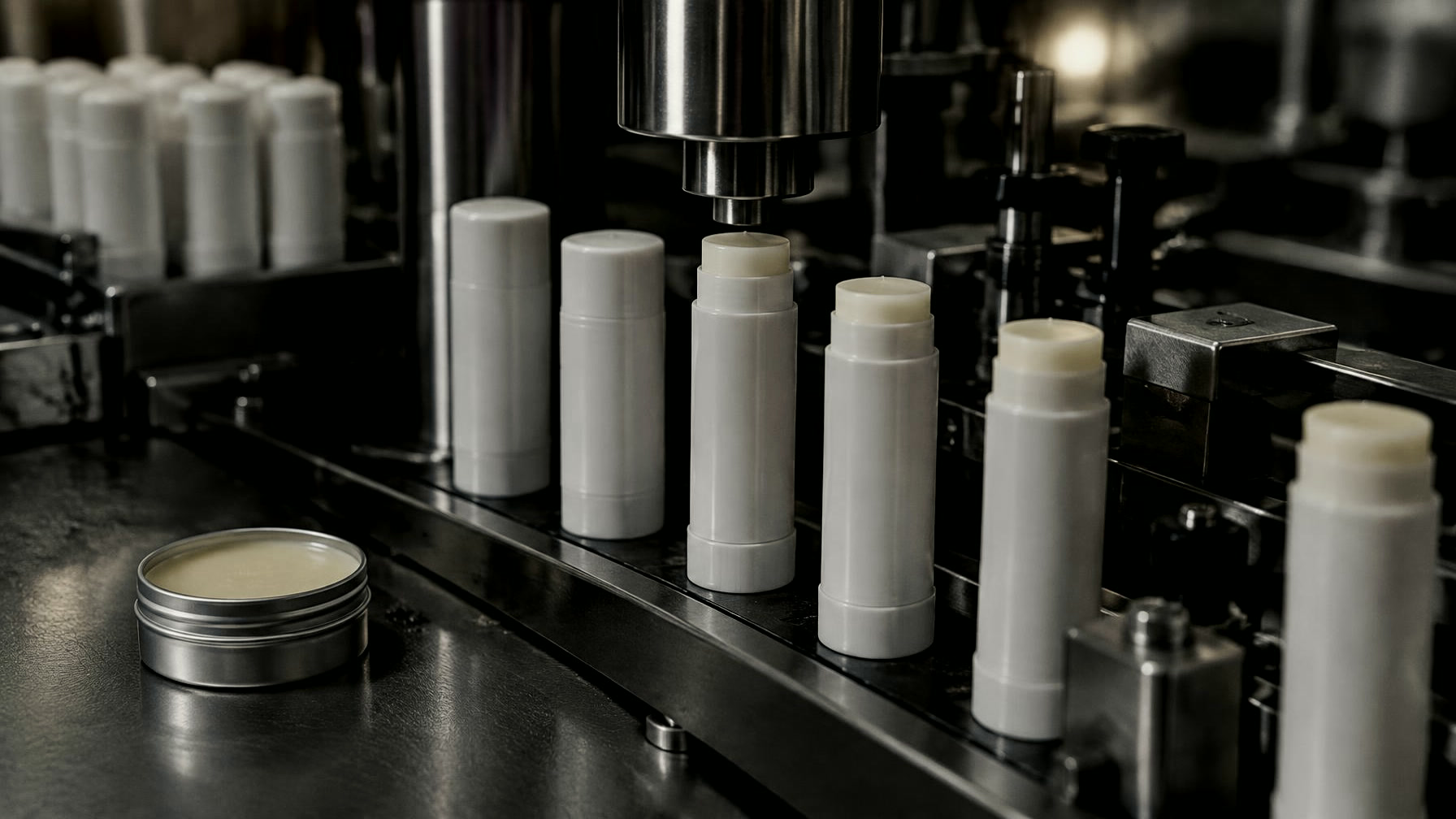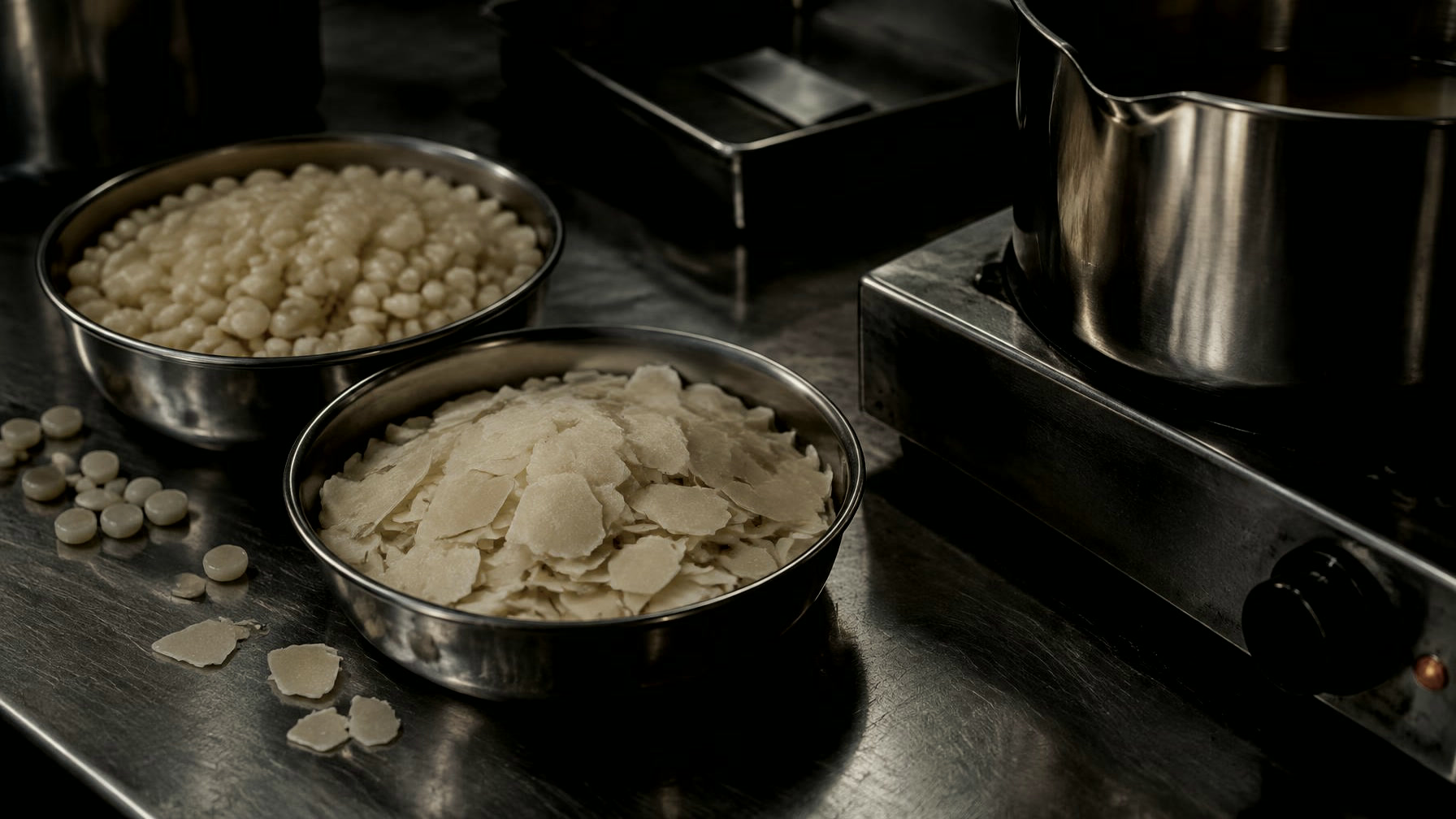
Each wax has its rheology fingerprint
Beeswax melts at 62–64 °C, gives soft chewy texture. Candelilla 68–73 °C, harder and brittle. Carnauba 82–86 °C, hardest of the three. Most lipstick masses use 2-of-3 blend for melt-point and pay-off.
§ KEY TAKEAWAYS
- 01Vegan claim requires candelilla + carnauba blend, no beeswax
- 02Carnauba is the hardness backbone; candelilla is the workhorse
- 03Filtered (white) beeswax costs 25% more than yellow but reads cleaner in lip products
- 04Lock annual contracts — wax markets are seasonal
§ GLOSSARY
Technical jargon, acronyms and scientific terms used in this file — decoded.
- Beeswax
- Wax secreted by honeybees; non-vegan, used in balms, lipsticks and food coatings.
- Candelilla wax
- Plant wax from Euphorbia cerifera (Mexico); vegan, harder than beeswax.
- Carnauba wax
- Plant wax from Copernicia prunifera palm (Brazil); hardest natural wax, used for melt-point structure.
- Pay-off
- Amount of product deposited per stroke; a key sensory metric for lipsticks and balms.
- Melt point
- Temperature at which a wax liquefies; lipstick mass is engineered to melt between 50–55 °C.