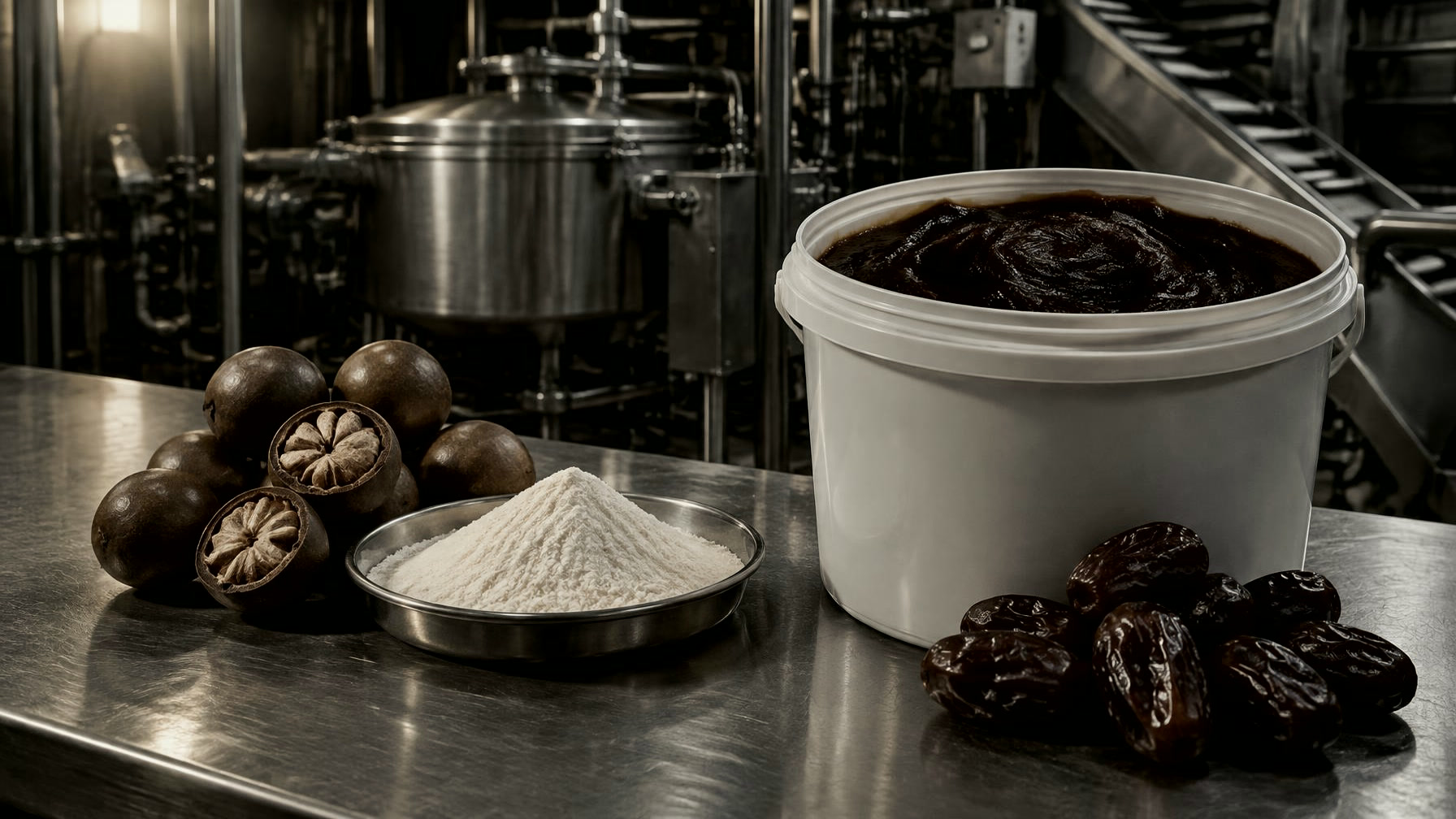
Mogroside purity is everything
Monk-fruit extract sweetness comes from mogroside V. Purity ranges 25–50%; pricing scales accordingly. Cheaper 25% extract requires 2× use level — net cost is similar but flavour profile suffers.
§ KEY TAKEAWAYS
- 01Spec mogroside V purity, not just 'monk fruit extract'
- 02China is a single-source risk for monk fruit
- 03Date paste is cost-effective for bakery but not for clean beverages
- 04Erythritol blends mask aftertaste of stevia and monk fruit
§ GLOSSARY
Technical jargon, acronyms and scientific terms used in this file — decoded.
- Mogroside V
- The dominant sweet glycoside in monk fruit; 200–250× sweeter than sucrose with zero calories.
- Luo han guo
- Mandarin name for monk fruit (Siraitia grosvenorii); native to southern China.
- Date paste
- Pulped, deseeded dates; a whole-fruit sweetener carrying fibre, minerals and zero added sugar.
- Glycaemic index
- Speed at which a food raises blood glucose; date paste GI ~42, monk fruit ~0.
- Aftertaste
- Lingering bitter or metallic flavour after swallowing; the classic stevia and monk-fruit issue.