Spray-dry vs dry-blend
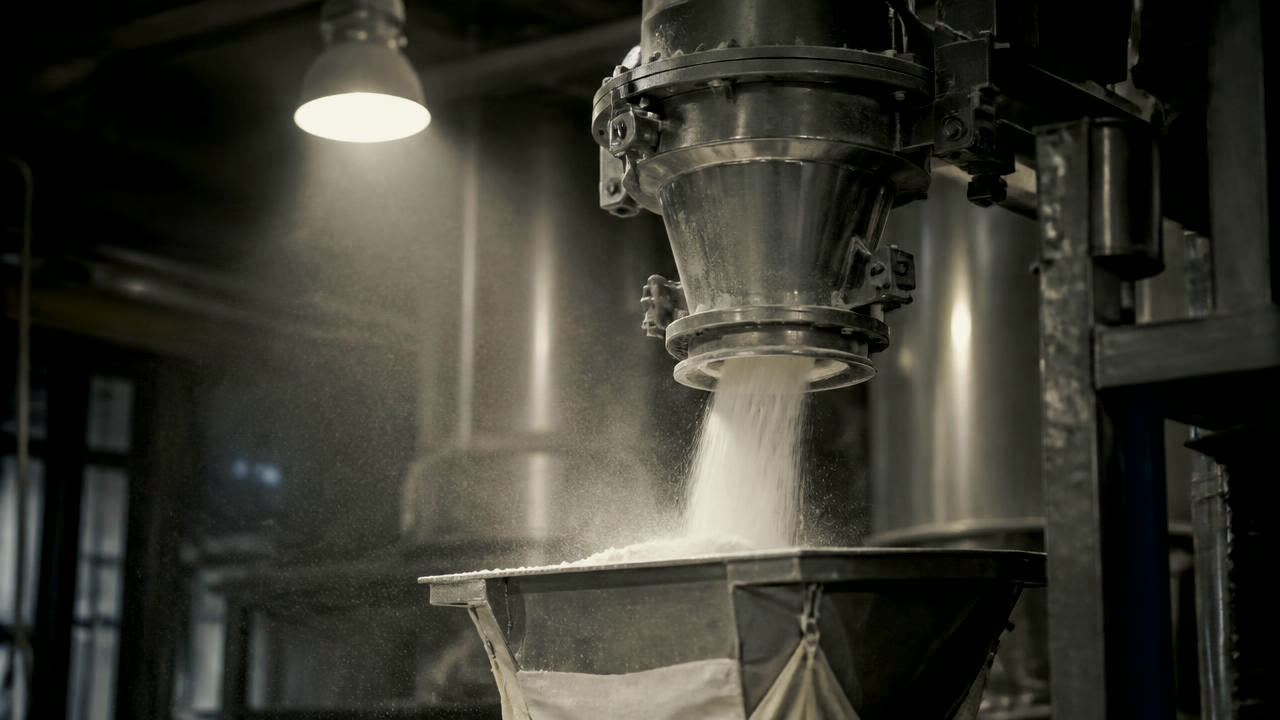
Spray-dried towers deliver hollow porous granules with better dissolution and bulk-density consistency. Dry-blend route is lower capex but produces inconsistent particle size.
§ KEY TAKEAWAYS
- 01Spray-dry route for premium; dry-blend for economy
- 02Enzyme stability needs sealed-packaging and low-moisture process
- 03Fragrance loading is the consumer-perception driver
- 04Bulk-density spec critical for filled-weight consistency
§ GLOSSARY
Technical jargon, acronyms and scientific terms used in this file — decoded.
- Spray-drying tower
- Tall vertical chamber where detergent slurry is atomised into hot air, forming dried granules.
- Dry-blend
- Lower-capex route where dry ingredients are mixed without spray-drying; cheaper but lower quality.
- LABSA
- Linear Alkylbenzene Sulphonic Acid — the dominant anionic surfactant in detergent powders.
- Zeolite builder
- Aluminosilicate that softens hard water; replacement for phosphates.
- Enzyme
- Biological catalyst (protease, lipase, amylase) that breaks down specific stains at low temperatures.