Manufacturing guide · Beverages
Packaged drinking water contract manufacturing in India
Packaged drinking water is usually ordered by truckload rather than small unit MOQs, with a 1 L PET bottle costing ₹5–9 ex-factory depending on bottle weight and cap type. Allow typically 4–8 weeks for production planning at an already compliant plant; licensing, inspection and testing readiness are separate dependencies with no fixed approval timeline.
Key facts
| Typical MOQ | Often set by truckload (roughly 1,000–1,500 cases of 12 × 1 L per truck (about 12–18 tonnes of water), depending on vehicle; allow for packaging weight and legal payload) rather than a small unit count |
|---|---|
| Typical pack sizes | 200 ml, 500 ml, 1 L PET bottles; 20 L jars for institutional/office supply |
| Indicative cost per unit | ₹5–9 per 1 L PET bottle, ex-factory |
| What the cost covers | Includes treated water, PET preform/bottle, cap, label and filling; excludes GST, freight, shrink-wrap tray beyond primary pack, brand margin |
| Lead time, brief to first batch | Typically 4–8 weeks for production planning at a compliant plant; excludes any new licensing or inspection time |
| Key licences and certifications | FSSAI licence; comply with the current FSSAI testing scheme for packaged drinking water; the mandatory BIS certification requirement has been removed; Legal Metrology labelling for pre-packaged goods |
| Typical shelf life | 6–12 months unopened in PET, subject to pack-specific shelf-life validation and storage away from sunlight and strong odours |
| Common formats | PET bottles (200 ml to 1 L), HDPE or PET 20 L jars for bulk/office use |
How it is made
Source water treatment
Raw water is filtered, treated (typically reverse osmosis or equivalent) and tested to meet packaged-water quality parameters.
Mineral balancing
Treated water is re-mineralised to a target TDS (total dissolved solids) range, since fully stripped water is flat-tasting and not typically sold as-is.
Bottle blow-moulding
PET preforms are blow-moulded into bottles in-line or sourced pre-blown, depending on the plant's integration level.
Filling and capping
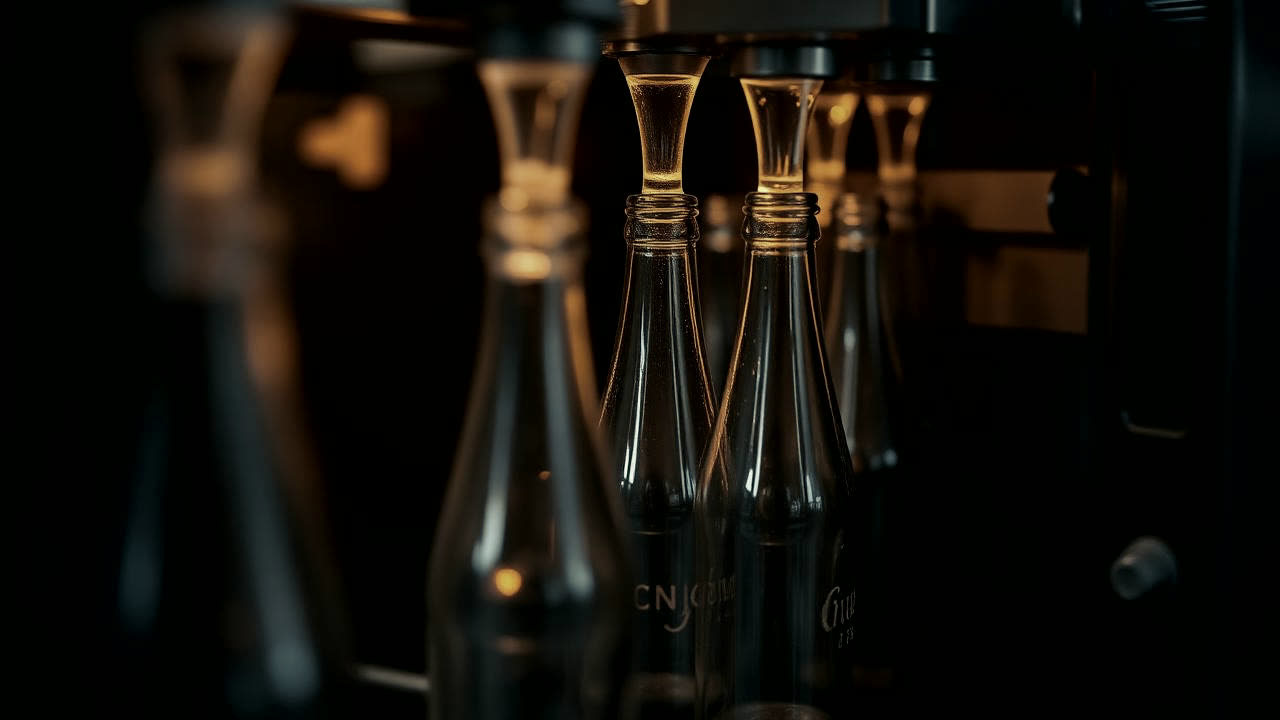
Water is filled and capped in a controlled environment to limit recontamination after the treatment step.
Batch testing and FSSAI compliance check
Maintain microbial and chemical testing and release records under the current FSSAI testing scheme for packaged drinking water.
What drives the cost
raises cost
Bottle weight (PET grammage)
Heavier bottles cost more in resin but resist crushing better in transit; lightweighted bottles cut cost but need careful handling design.
lowers cost
In-house blow-moulding vs bought-in bottles
Plants that blow-mould their own bottles from preforms usually quote a lower per-bottle cost than those buying pre-blown bottles.
depends
Distance from source to filling plant
Water is heavy to transport, so a plant located far from your target market adds significant freight cost even if unit cost looks low.
raises cost
Testing and inspection readiness
Source-water and finished-product testing, inspection readiness and documented release checks add costs that must be allocated across the order.
raises cost
Cap and tamper-seal design
Tamper-evident caps with a visible broken-seal indicator cost marginally more than a basic screw cap.
Common mistakes first-time brands make
Assuming compliance is automatic
Confirm the manufacturing site has the appropriate FSSAI licence and current testing and inspection records before booking production; a plant booking alone does not establish compliance.
Choosing a plant purely on unit price
A low per-bottle quote from a distant plant can be erased by freight cost on a heavy, low-value product like water; factor in landed cost to your actual market.
Overlooking TDS and taste consistency
Re-mineralisation levels that drift batch to batch create a noticeable taste difference; ask for TDS consistency data across recent batches.
Choosing a manufacturer for packaged drinking water
Licensed and tested production capability
Confirm the manufacturing site holds the appropriate FSSAI licence and follows the current testing scheme for packaged drinking water.
Bottling capacity and location
Check rated bottles-per-hour capacity and plant location relative to your target distribution region to control freight cost.
Certifications
FSSAI licensing and the current water testing scheme are required; ISO 22000 is an optional process-assurance credential, not a substitute.
Sampling and batch consistency
Request recent batch test reports for TDS and microbial parameters to judge consistency before committing volume.
Frequently asked questions
- Why is packaged water ordered by truckload rather than units?
- Water is low-value and heavy relative to its cost, so plants set MOQs in truckloads to make a production run and freight trip viable rather than quoting small unit counts.
- How long do licensing and testing checks take?
- There is no universal approval timeline. Confirm current licensing, inspection and testing readiness with the plant and competent authority before assigning a launch date.
- Does my brand automatically inherit the plant's compliance?
- No. Verify the manufacturing site licence, product scope, testing records and your own brand-owner obligations. Mandatory BIS certification was removed; an optional BIS mark must not be used without valid authorisation.
- What affects taste differences between brands?
- Re-mineralisation levels (the TDS target chosen) are the main driver of taste differences between packaged water brands using similar source water.
- Is 20 L jar packaging a separate production line?
- Yes, jar filling and the washing/sanitising of returnable jars typically run on a separate line from small-format PET bottles.
How BrandForge helps
BrandForge matches your packaged water brief to appropriately licensed bottling plants located to suit your target distribution region, cutting down the freight surprises that come with a heavy, low-value product. A success manager helps you sequence licensing and water-testing readiness alongside production planning so neither step unnecessarily delays the other.