Manufacturing guide · Beverages
Fruit juice in PET bottles contract manufacturing in India
Fruit juice in PET typically runs an MOQ of 25,000–1 lac bottles for a 200 ml pack, costing ₹14–25 per bottle, while a 1 L PET bottle costs ₹45–80 ex-factory depending on fruit content and pulp handling. Lead time is 6–10 weeks from an approved fruit base and preservation method to first batch, and an FSSAI licence covering fruit beverages is mandatory; the product must meet FSSAI standards for the fruit beverage category it is sold under.
Key facts
| Typical MOQ | 25,000–1 lac bottles per SKU (200 ml); lower unit counts for 1 L packs by volume |
|---|---|
| Typical pack sizes | 200 ml, 250 ml and 1 L PET bottles; occasional 125 ml single-serve |
| Indicative cost per unit | ₹14–25 per 200 ml PET bottle; ₹45–80 per 1 L PET bottle |
| What the cost covers | Includes fruit pulp/concentrate, water, sugar, preservative or thermal process, PET bottle and cap, filling; excludes GST, freight, shrink trays beyond primary pack, brand margin |
| Lead time, brief to first batch | 6–10 weeks from approved fruit ratio and preservation method to first batch |
| Key licences and certifications | FSSAI licence; product must meet FSSAI standards for the fruit beverage category it is sold under; Legal Metrology labelling for pre-packaged goods |
| Typical shelf life | 6–9 months ambient for hot-filled or preservative-based juice; shorter for unpasteurised cold-chain juice |
| Common formats | PET bottles (clear or tinted); HDPE occasionally used for opaque pulpy variants |
How it is made
Fruit base preparation
Pulp, concentrate or fresh-pressed juice is standardised for Brix, acidity and pulp content before blending.
Blending and standardisation
Water, sugar or sweetener, acidulant and any permitted preservative are mixed in to hit the target formulation profile.
Pasteurisation or hot-fill
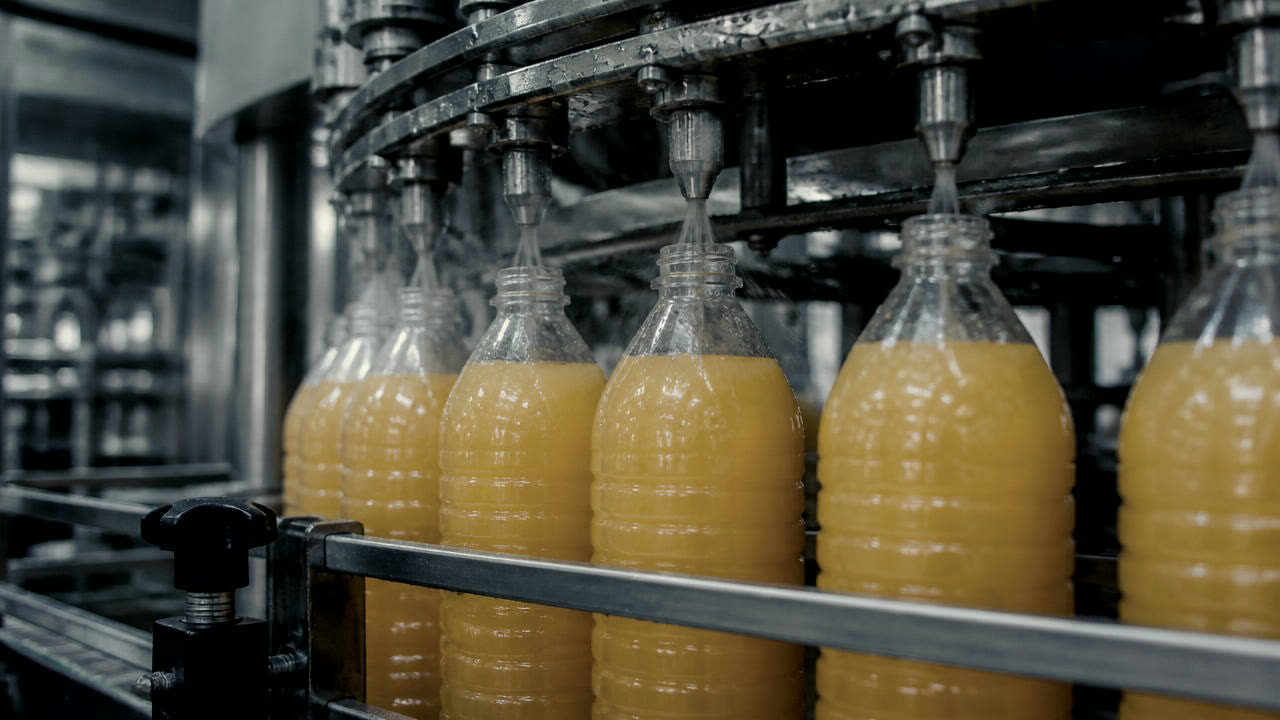
Juice is heat-treated to reduce microbial load, then typically hot-filled into PET bottles and inverted briefly to sterilise the cap and neck.
Cooling and labelling
Bottles are cooled in a tunnel to avoid thermal shock to the PET, then labelled and date-coded.
Cold-chain or ambient dispatch decision
Depending on the preservation method chosen, finished stock is routed to ambient warehousing or cold storage before dispatch.
What drives the cost
raises cost
Fruit pulp vs concentrate vs reconstituted juice
Pulp-based juice with visible fruit content costs more in raw material and needs careful homogenisation to avoid settling.
depends
Preservation method (hot-fill vs HPP vs cold chain)
Hot-fill is the cheapest preservation route; cold-pressed or HPP juice needs cold chain and costs considerably more per unit.
raises cost
Bottle weight and PET grade
Food-grade PET suited to hot-filling needs a heat-set bottle, which costs more than a standard cold-fill PET bottle.
lowers cost
Batch size per flavour
A longer run amortises the fruit-processing and line-cleaning time over more bottles.
depends
Pack size (200 ml vs 1 L)
Per-litre cost usually drops at 1 L due to lower packaging cost per litre, even though per-bottle cost is higher.
Common mistakes first-time brands make
Choosing a preservation method after bottle design is locked
Hot-fill needs a heat-set PET bottle; choosing bottle design before confirming preservation method can force an expensive bottle redesign.
Underestimating pulp settling
High-pulp juice without proper homogenisation separates visibly on the shelf; this should be checked in an accelerated shelf trial, not assumed fine from a lab sample.
Overpromising 'fresh' claims on a shelf-stable product
A hot-filled or preservative-stabilised juice should not be labelled in a way that implies fresh-pressed, unpasteurised quality.
Choosing a manufacturer for fruit juice in pet bottles
Fruit processing and blending capability
Confirm the plant can handle your specific fruit (pulpy mango vs clear apple vs citrus) since equipment needs differ.
Certifications
FSSAI licence and FSSC 22000 or HACCP certification are the baseline markers for a juice-grade plant.
Hot-fill or cold-chain capacity
Ask what preservation routes the plant actually runs in-house rather than outsources, since outsourced steps add lead time.
Sampling before scale-up
Request a small hot-fill trial batch to check colour and flavour stability under actual thermal conditions before locking the full MOQ.
Frequently asked questions
- Can I avoid preservatives in a shelf-stable juice?
- Yes, hot-fill or aseptic processing can give ambient shelf stability without added chemical preservatives, relying on heat treatment instead; this usually costs more than a preservative-based formulation.
- What's the difference between HPP and hot-fill juice?
- HPP (high-pressure processing) preserves juice without heat, keeping flavour closer to fresh, but needs cold-chain distribution and costs more than hot-filled juice.
- Is a 1 L pack always more cost-efficient to launch?
- Per-litre cost is usually lower at 1 L, but it needs a higher fruit and packaging cash outlay upfront and suits household rather than single-serve positioning.
- How do I handle seasonal fruit availability?
- Most plants work from frozen pulp or concentrate stocks to avoid seasonal gaps; ask your manufacturer how they source pulp during the fruit's off-season.
- Can the same line run multiple fruit flavours?
- Yes, but each flavour change needs a full line clean to avoid cross-contamination of allergens or strong flavours like mango into a citrus batch.
How BrandForge helps
BrandForge matches your juice brief to manufacturers already running your specific fruit base and preservation method, whether hot-fill, HPP or cold chain, avoiding a mismatch discovered mid-production. Partner details stay blind until both sides confirm fit, and a success manager coordinates the hot-fill trial before the full batch is scheduled.