Manufacturing guide · Personal care
Soap bars contract manufacturing in India
Soap bar MOQs are typically higher than other personal care products, often 25,000+ bars, because of plodder batch economics, and a 100 g bar costs roughly ₹10–25 ex-factory. First batches ship in 8–14 weeks, and the manufacturer needs a cosmetics manufacturing licence issued by the State Licensing Authority under the Cosmetics Rules, 2020.
Key facts
| Typical MOQ | 25,000+ bars per SKU typically, smaller runs possible at higher per-unit cost |
|---|---|
| Typical pack sizes | 75 g, 100 g, 125 g bar |
| Indicative cost per unit | ₹10–25 for a 100 g bar |
| What the cost covers | Ex-factory: oil/fat base, saponification agents, actives, wrapper and stamping included; excludes GST, freight, shipper cartons, brand margin |
| Lead time, brief to first batch | 8–14 weeks, brief to first batch |
| Key licences and certifications | Cosmetics manufacturing licence issued by the State Licensing Authority under the Cosmetics Rules, 2020; Legal Metrology labelling for pre-packaged goods |
| Typical shelf life | 24–36 months |
| Common formats | Wrapped bar, boxed bar, triple-milled premium bar |
How it is made
Saponification
Oils and fats are reacted with an alkali in a saponification kettle to form the base soap noodle or pellet, the chemical step unique to soap among personal care products.
Curing
Freshly made soap is cured for a period to let saponification complete and moisture reduce, affecting bar hardness and lather.
Milling and plodding
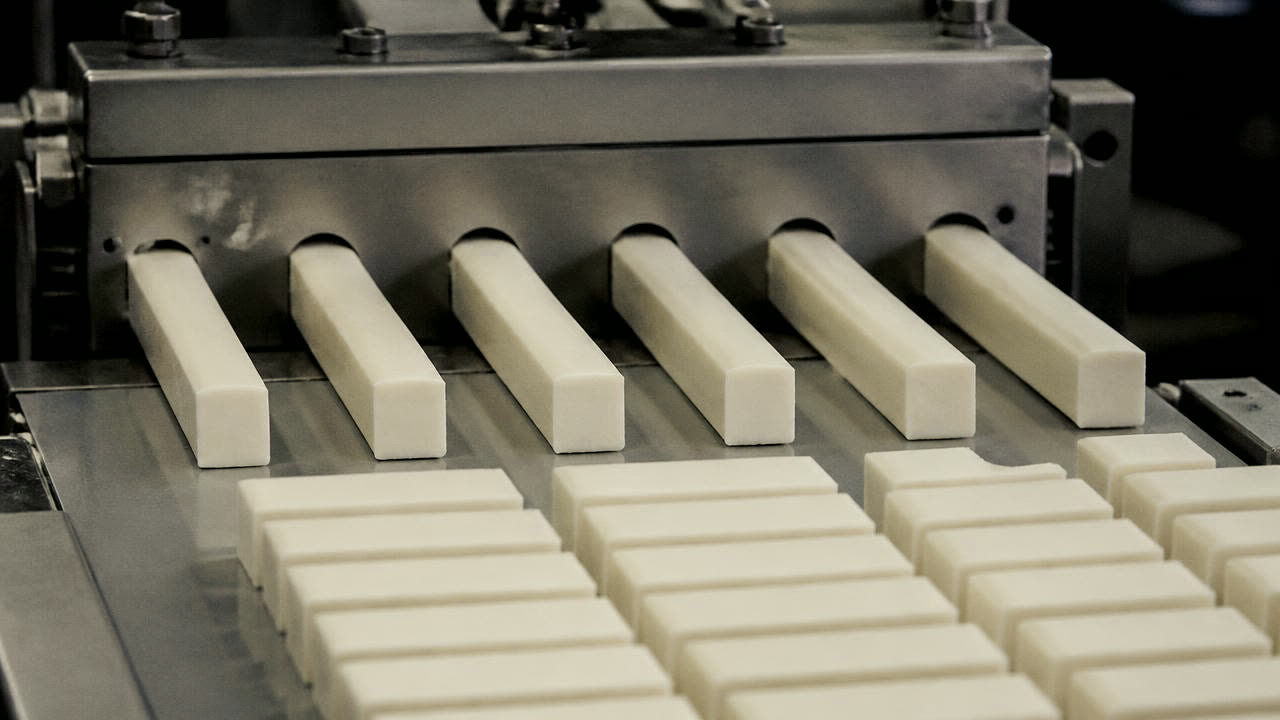
Cured soap is milled with fragrance, actives and colour, then extruded through a plodder into a continuous soap log of uniform cross-section.
Cutting and stamping
The log is cut into bar-length blanks and stamped in a die press to form the final bar shape and branding.
Wrapping and cartoning
Bars are wrapped, batch coded, and packed into cartons and shippers.
What drives the cost
raises cost
Oil and fat blend
Blends using higher-cost oils (such as specialty botanical oils) over basic tallow or palm-based bases raise the per-bar raw material cost.
depends
Curing time
Longer curing produces a harder, longer-lasting bar but ties up production space longer, which manufacturers factor into cost for shorter runs.
raises cost
Actives and exfoliants
Adding scrub particles, botanical actives or specialty fragrance raises the milling-stage formulation cost.
lowers cost
Batch/run size
Soap plodding is most efficient at large continuous runs, which is why per-bar cost drops sharply above typical MOQ thresholds.
raises cost
Wrapper and stamping tooling
Custom bar shapes or embossed stamps need dedicated die tooling, adding a one-time cost.
Common mistakes first-time brands make
Underestimating curing time
Rushing a batch to market before adequate curing produces a softer bar that wears down faster and lathers inconsistently.
Ordering below efficient plodder batch size
Running well below the typical 25,000+ bar MOQ pushes per-bar cost up sharply since plodder changeover and curing space aren't used efficiently.
Skipping fragrance-oil migration checks
Some fragrance oils can migrate and discolour the wrapper over time if not tested for compatibility before the full run.
Choosing a manufacturer for soap bars
Saponification and curing facility
Check the manufacturer has dedicated kettle and curing space, not just a milling/plodding line for pre-made soap base.
Certifications
Look for cosmetic manufacturing licence and GMP certification for the saponification facility.
Plodder capacity
Confirm the plodder's daily output matches your MOQ and reorder frequency.
Sampling process
Request cured bar samples at the formulation stage, since lather and hardness only show properly after curing, not right after saponification.
Frequently asked questions
- Why is the MOQ for soap bars higher than other personal care products?
- Saponification and plodding are most cost-efficient at large continuous runs, so manufacturers typically require 25,000+ bars per SKU to keep per-bar cost reasonable.
- How long does curing take?
- Curing time varies by oil blend and bar type; manufacturers build this into the overall lead time rather than quoting it separately.
- Can I make a transparent or glycerin soap bar?
- Yes, but transparent/glycerin bars use a different process (melt-and-pour rather than cold or hot saponification) and need a manufacturer set up specifically for that method.
- Can I add exfoliating particles to the bar?
- Yes, exfoliants like oatmeal or walnut shell powder are added at the milling stage, with dosage tested to keep the particles evenly distributed through the bar.
How BrandForge helps
BrandForge matches your soap bar brief double-blind against manufacturers with saponification and plodding capacity suited to your run size, revealing names only once both sides approve. A success manager then helps schedule curing time into your overall launch timeline.