Anti-perspirant vs deodorant
Anti-perspirants block sweat ducts via aluminium chlorohydrate (ACH) at 12–18% — a CDSCO-regulated active. Deodorants only mask odour via fragrance + antimicrobial alcohol or essential oils. Aluminium-free skips the ACH and the regulated-product status but loses 6–8 hour 'no wet patch' performance.
Ball and closure tooling
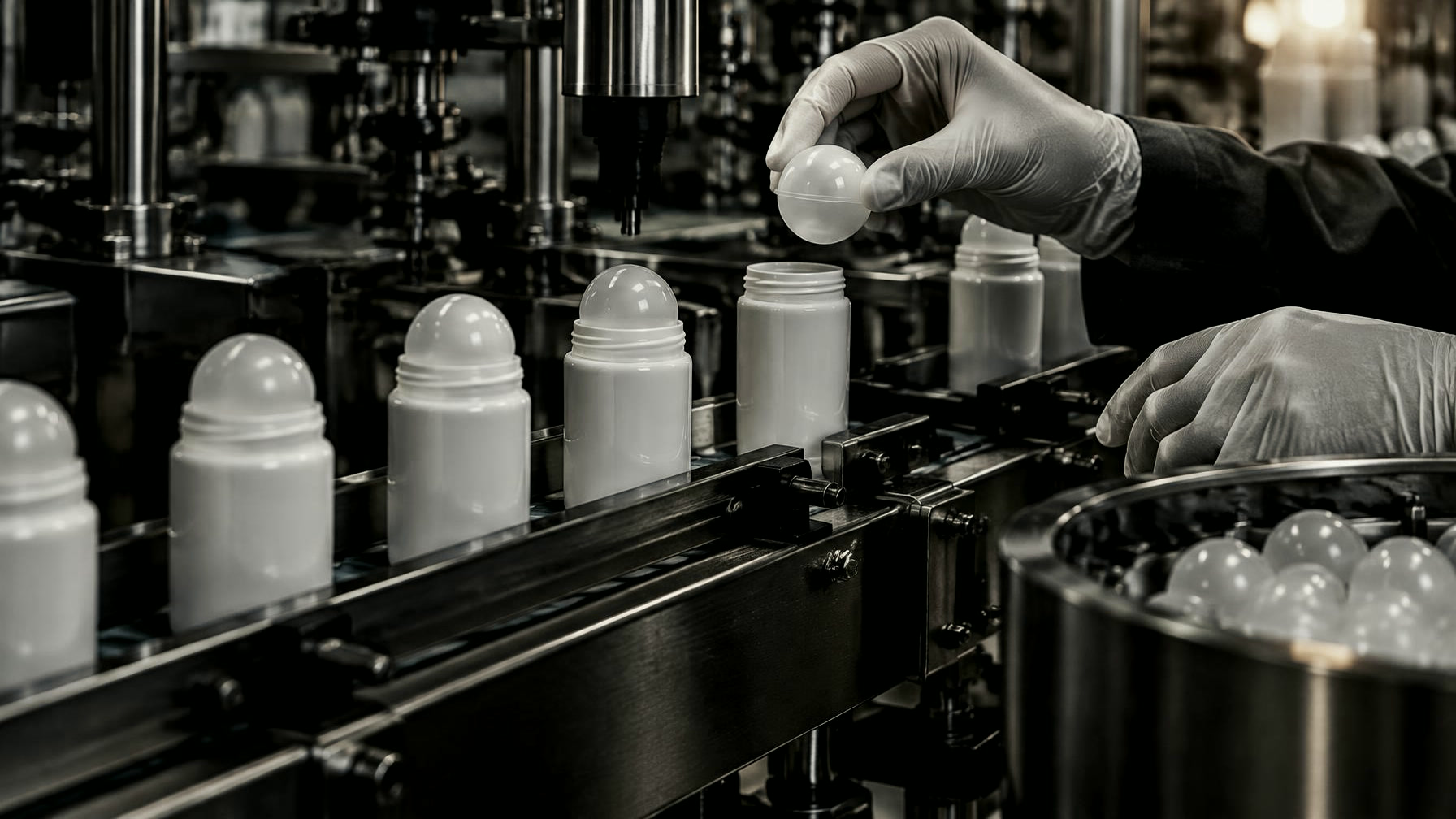
Roll-on ball quality is the silent margin lever: polypropylene balls leak roll-back into product within 4 months; HDPE balls are stable but 8% more expensive.
§ KEY TAKEAWAYS
- 01ACH triggers cosmetic-with-claim regulatory class — plan dossier early
- 02Aluminium-free is positioning, not just chemistry
- 03Roll-on ball spec is non-negotiable — leakage kills repeat
- 04Fragrance loading drives 14–20% of landed cost
§ GLOSSARY
Technical jargon, acronyms and scientific terms used in this file — decoded.
- ACH
- Aluminium Chlorohydrate — the active in anti-perspirants that forms a temporary plug in sweat ducts.
- Cosmetic-with-claim
- CDSCO regulatory tier requiring efficacy substantiation and safety dossier; sits between cosmetics and OTC drugs.
- Roll-on ball
- The spherical applicator at the tube opening; material grade determines leakage rate.
- Triclosan
- Antimicrobial once widely used in deodorants; now banned in most markets — Indian brands have phased out by 2024.
- Antiperspirant claim
- Statement that the product reduces sweat; legally distinct from 'deodorant' which only addresses odour.