Manufacturing guide · Beverages
Energy drinks in cans contract manufacturing in India
Energy drink cans typically need a 25,000–1 lac can MOQ per flavour, with a 250 ml can costing ₹22–38 ex-factory once caffeine, taurine and vitamin premixes are accounted for. Lead time runs 6–10 weeks from a finalised formulation to first filled batch, and the formulation must be screened against FSSAI's caffeine and additive limits before production is booked. Because the category is scrutinised more closely than a plain soft drink, plants typically ask for a stability sample of your exact formulation before quoting a firm price.
Key facts
| Typical MOQ | 25,000–1 lac cans per SKU |
|---|---|
| Typical pack sizes | 250 ml standard and slim cans; 150 ml trial-size cans occasionally offered |
| Indicative cost per unit | ₹22–38 per 250 ml can, ex-factory |
| What the cost covers | Includes caffeine/taurine/vitamin premix, syrup base, CO2, can and seaming; excludes GST, freight, secondary cartons, brand margin |
| Lead time, brief to first batch | 6–10 weeks, longer if the caffeine dose needs a compliance recheck |
| Key licences and certifications | FSSAI manufacturing licence; formulation must meet FSSAI's standard for caffeinated beverages, including caffeine limits and mandatory label declarations; Legal Metrology labelling for pre-packaged goods |
| Typical shelf life | 9–12 months, with vitamin potency monitored closer to the end of shelf life |
| Common formats | Aluminium cans (standard and slim); limited PET variants for larger formats |
How it is made
Premix formulation
Caffeine, taurine, B-vitamins and acidulants are dissolved in a precise order to avoid precipitation or off-colour reactions.
Compliance dosing check
The caffeine level per 100 ml is verified against regulatory limits before the batch is scaled up from lab to plant volume.
Carbonation and filling
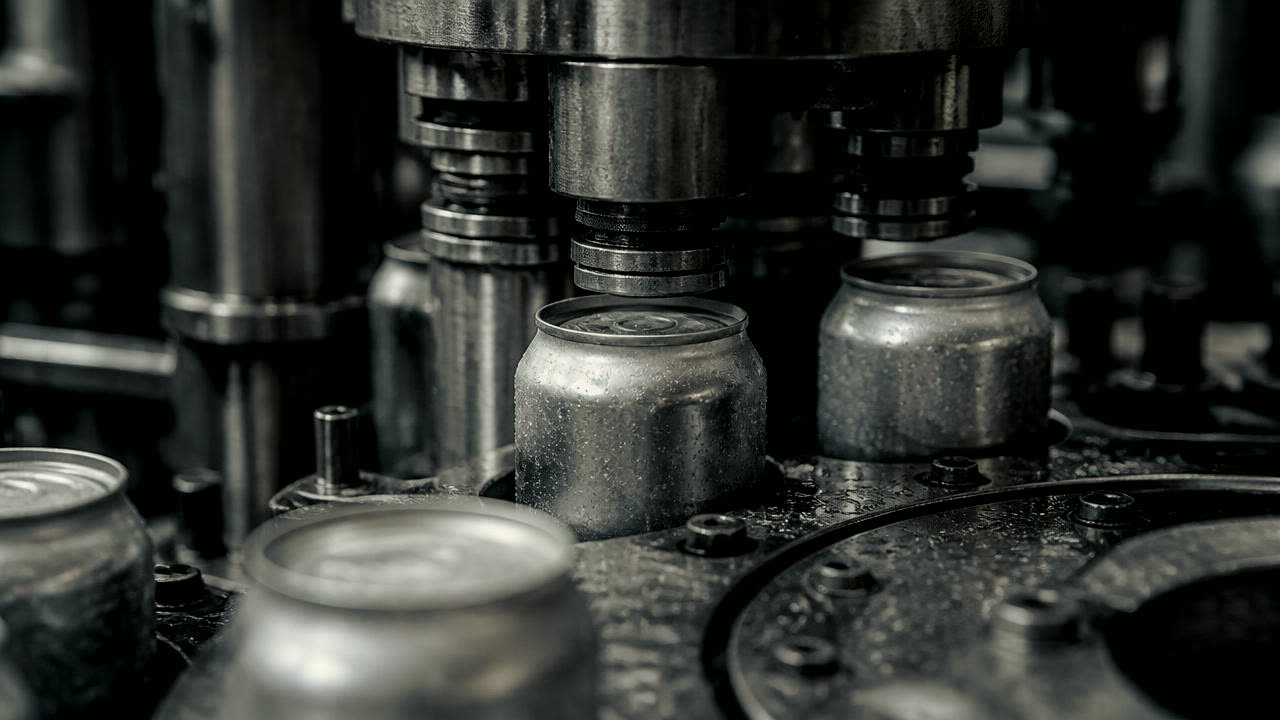
The finished syrup is blended with chilled carbonated water and filled into cans under counter-pressure, similar to a CSD line but at tighter fill-volume tolerance.
Seaming and pasteurisation check
Cans are seamed and, where the formulation needs it, held for a short thermal step to manage microbial load without degrading vitamins.
Coding, packing and quarantine
Batches are coded and held in quarantine pending a release test on caffeine assay and carbonation before dispatch.
What drives the cost
raises cost
Caffeine and taurine sourcing
Pharma-grade caffeine and taurine cost more than food-grade flavour inputs and need certificate of analysis on every lot.
raises cost
Vitamin premix complexity
Multi-vitamin blends with stability coatings add cost compared to a single-ingredient stimulant base.
raises cost
Compliance retesting
Any change in flavour or dose after the first approved batch usually triggers a fresh lab assay, adding time and fee.
lowers cost
Order volume per flavour
Running a longer batch spreads the premix setup and assay cost over more cans.
depends
Can decoration (printed vs sleeved)
Directly printed cans cost more upfront in tooling but can be cheaper per unit at high volumes than shrink-sleeved cans.
Common mistakes first-time brands make
Finalising claims before the caffeine assay
Label copy promising a specific caffeine content should wait for the actual batch assay, since small lot-to-lot variance is normal.
Treating it like a standard CSD run
Vitamin and caffeine premixes are sensitive to pH and heat; a plant without functional-beverage experience may under-dose or degrade actives during processing.
Overlooking stability testing timeline
Skipping a 3-month accelerated stability check before scaling up can mean discovering flavour or vitamin drift only after the full MOQ is already canned.
Choosing a manufacturer for energy drinks in cans
Functional-beverage formulation capability
Confirm the plant has handled caffeine/taurine dosing before, not only flavoured soft drinks.
Certifications
FSSAI licence with the relevant product category noted, plus ISO 22000 for documented batch traceability.
Assay and testing capacity
Ask whether caffeine assay is done in-house or sent to a third-party lab, and how that affects batch release time.
Trial batch sampling
Insist on a small-batch stability sample before locking the full MOQ, given how sensitive these formulations are to storage conditions.
Frequently asked questions
- Is there a cap on caffeine content I should know about?
- Yes, caffeinated beverages are expected to stay within the current FSSAI-prescribed caffeine limits for caffeinated beverages; your formulation should be checked against this before production.
- Can I use a natural caffeine source like guarana?
- Check that the proposed source is permitted for the selected FSSAI category. Total caffeine and mandatory declarations must meet the current standard regardless of source; obtain a composition assay before scaling.
- Why does the quote vary so much between manufacturers?
- Quotes vary mainly on vitamin premix sourcing and whether the plant already runs a validated functional-beverage line, since new line validation adds a one-time cost.
- How soon can I add a sugar-free variant?
- A sugar-free variant usually needs its own stability trial because sweetener blends behave differently with caffeine and acid; budget 2–3 extra weeks for this.
- What packaging formats work for a small trial launch?
- Slim 250 ml cans in a smaller trial MOQ, where offered, are a common way to test a flavour before committing to the full run.
How BrandForge helps
BrandForge screens your energy-drink brief against manufacturers who already run caffeine and vitamin premix lines, so your formulation goes to plants that can dose it correctly the first time. The matching is blind until both sides agree on fit, and your success manager coordinates the stability sample before the full batch is scheduled.