Manufacturing guide · Nutraceuticals
Ayurvedic churna contract manufacturing in India
Ayurvedic churna is contract manufactured at an MOQ typically set by pulverising batch size, around 300–1,000 kg of finished powder, costing roughly ₹30–70 per 100 g pack ex-factory depending on herb sourcing and mesh fineness. A first batch usually takes 8–14 weeks, and the ayurvedic product needs an AYUSH manufacturing licence from the state licensing authority.
Key facts
| Typical MOQ | 300–1,000 kg finished powder (approximately 3,000–10,000 packs of 100 g before filling losses; allow extra raw herbs for cleaning and milling losses) |
|---|---|
| Typical pack sizes | 50 g, 100 g and 200 g pouches or jars |
| Indicative cost per unit | ₹30–70 per 100 g pack (ex-factory) |
| What the cost covers | Ex-factory: raw herb sourcing and cleaning, pulverising, sieving and primary pack (pouch or jar) included; excludes GST, freight, secondary carton, brand margin |
| Lead time, brief to first batch | 8–14 weeks from brief and herb sourcing to first pulverised and packed batch |
| Key licences and certifications | AYUSH manufacturing licence from the state licensing authority for ayurvedic products; Legal Metrology labelling for pre-packaged goods |
| Typical shelf life | 12–18 months from manufacture, dependent on moisture control and packaging |
| Common formats | Fine powder (churna); loose herb blend, no capsule or tablet form |
How it is made
Herb sourcing and authentication
Dried herbs or roots are sourced against a defined specification and checked for correct botanical identity, since substitution or adulteration is a known risk in raw herb supply.
Cleaning and drying
Raw material is cleaned to remove stones, stalks and foreign matter, and re-dried if moisture content is above the level needed for stable pulverising.
Pulverising
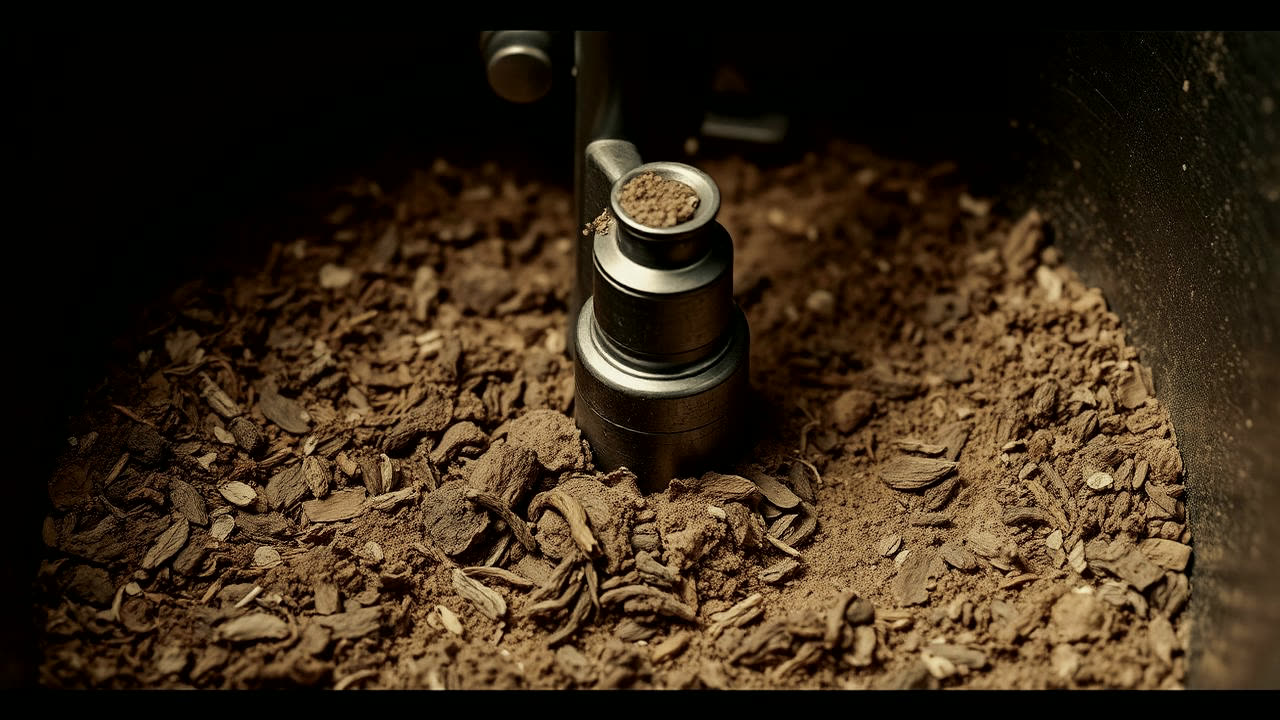
A pulveriser or hammer mill reduces dried herbs to a fine powder, with mesh size chosen to match the traditional churna fineness expected for the formulation.
Sieving and blending
Pulverised herbs are passed through a sieve of the specified mesh and blended in the proportions set by the formulation, batch by batch.
Packing
The finished churna is packed into pouches or jars, typically with a moisture barrier liner, and sealed and labelled per the batch record.
Batch testing
A sample is tested for heavy metals, microbial load and sometimes pesticide residue before the batch is released for dispatch.
What drives the cost
raises cost
Herb sourcing and seasonal availability
Herbs with a narrow harvest window or regional sourcing constraint cost more and can also stretch lead time outside the harvest season.
raises cost
Mesh fineness
A finer mesh specification needs longer pulverising time and more sieving passes, raising conversion cost per kg.
raises cost
Number of herbs in the formulation
A multi-herb churna needs separate cleaning, drying and milling of each component before blending, adding handling steps versus a single-herb powder.
raises cost
Heavy-metal and pesticide testing
Herbal raw materials are more prone to heavy-metal uptake from soil, so testing panels for this category tend to be more extensive than for synthetic actives.
lowers cost
Batch size
A full pulverising run amortises mill cleaning and changeover cost across more kg of finished churna.
raises cost
Packaging barrier
A moisture-barrier pouch or jar liner costs more than a basic paper or thin-film pack but protects the hygroscopic powder.
Common mistakes first-time brands make
Not verifying botanical authentication
Brands who skip authentication testing on incoming herbs risk a batch made with a substituted or lower-grade botanical that looks similar when dried.
Underestimating heavy-metal testing needs
Herbal powders can carry soil-derived heavy metals; skipping this test line is a common and risky shortcut on early batches.
Assuming FSSAI licence is sufficient
Most churna formulated with classical ayurvedic herb combinations need an AYUSH manufacturing licence; using an FSSAI-only manufacturer can create a licensing mismatch.
Overlooking moisture pickup after pulverising
Freshly pulverised fine powder absorbs ambient moisture quickly; delaying packing after milling can affect shelf life and clumping.
Choosing a manufacturer for ayurvedic churna
Pulverising and sieving capability
Check the manufacturer's mill type and mesh range matches your required churna fineness, and that they handle multi-herb blending accurately.
Certifications
Look for an AYUSH manufacturing licence specifically, alongside GMP certification for ayurvedic products, not just a general food licence.
Capacity fit
Match your 300–1,000 kg batch size against their minimum pulverising run, since herb sourcing lots are often fixed in size.
Sampling and herb traceability
Ask for a sample batch along with botanical authentication and heavy-metal test reports for the specific herb lot used.
Frequently asked questions
- What licence does ayurvedic churna need?
- An ayurvedic churna needs an AYUSH manufacturing licence from the state licensing authority for ayurvedic products; a food powder is a different regulatory category, not a licensing shortcut.
- What is the MOQ for churna manufacturing?
- MOQ is usually set by pulverising batch size, around 300–1,000 kg of finished powder, which works out to roughly 3,000–10,000 packs of 100 g.
- Why does churna need heavy-metal testing?
- Herbal raw materials can take up heavy metals from soil during growth, so batch testing for this is a standard check before release, more so than for many synthetic nutraceutical formats.
- How long does a churna batch take from brief to delivery?
- Allow 8–14 weeks, with herb sourcing and authentication often the longest step, especially for herbs with a seasonal harvest window.
- Can churna be packed in a jar instead of a pouch?
- Yes, a jar gives better moisture protection and a premium shelf presence but costs more per pack than a laminate pouch.
How BrandForge helps
BrandForge matches your churna brief against verified AYUSH-licensed formulators with the right pulverising and herb-sourcing capability, screening for botanical authentication practice before revealing names. A success manager helps track herb sourcing and testing timelines, which tend to be the main lead-time variable for this category.