Manufacturing guide · Food
Cookies and biscuits contract manufacturing in India
Cookies and biscuits typically launch at an MOQ of 8,000–20,000 packs of 150 g, with ex-factory cost of ₹15–30 per pack depending on fat type, inclusion level (chocolate chips, nuts) and whether the line is wire-cut, rotary-moulded or deposited. Lead time is usually 6–10 weeks from recipe finalisation to first batch, and an FSSAI licence with consistent tunnel-oven baking control are the baseline requirements. Oven zone temperature profiling has the single biggest effect on colour and moisture consistency across a batch.
Key facts
| Typical MOQ | 8,000–20,000 packs of 150 g per SKU |
|---|---|
| Typical pack sizes | 75 g, 150 g pouch; 300 g–1 kg family pack/tin |
| Indicative cost per unit | ₹15–30 per 150 g pack, ex-factory |
| What the cost covers | Ex-factory: flour, fat, sugar, inclusions, baking conversion and primary pouch included; excludes GST, freight, outer cartons, brand margin |
| Lead time, brief to first batch | 6–10 weeks from recipe finalisation to first batch |
| Key licences and certifications | FSSAI licence; product must meet applicable FSSAI category standards; Legal Metrology labelling for pre-packaged goods |
| Typical shelf life | 6–9 months in moisture-barrier pouch |
| Common formats | Wire-cut, rotary-moulded, deposited (soft-centre), sandwich/cream-filled |
How it is made
Dough mixing
Flour, fat, sugar and leavening agents are mixed to the target dough consistency; mixing time varies by whether the dough is short or laminated.
Shaping
Dough is shaped by wire-cutting, rotary moulding or depositing, depending on the biscuit type and whether inclusions like chocolate chips are present.
Baking
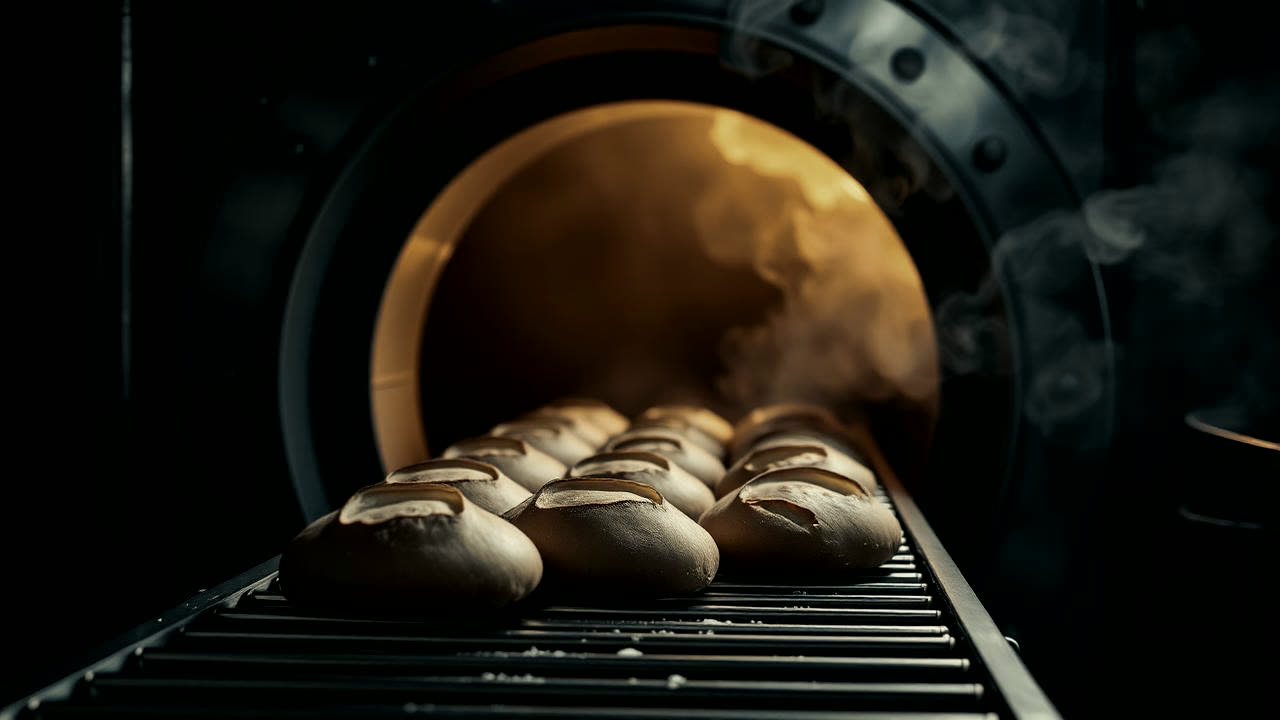
Shaped dough passes through a multi-zone tunnel oven, with temperature and belt speed tuned per zone to control spread, colour and final moisture.
Cooling
Baked biscuits cool on a conveyor before handling, since warm biscuits are fragile and prone to breakage.
Cream filling or enrobing (if applicable)
Sandwich biscuits get cream deposited between two shells; some variants are partially enrobed with chocolate after cooling.
Packing and QC release
Moisture content, weight and breakage rate are checked before nitrogen-flushed or standard pouch packing.
What drives the cost
depends
Fat type
Butter-based formulations cost more and need tighter temperature control than vegetable-fat-based ones, which run more consistently on long production lines.
raises cost
Inclusions
Chocolate chips, nuts or dried fruit raise ingredient cost and may need dosing equipment calibration for even distribution.
depends
Shaping method
Rotary-moulded lines run faster for simple shapes, while deposited or wire-cut lines suit softer, higher-fat doughs but at a slower throughput.
raises cost
Cream filling or enrobing
Adding a cream-filling or chocolate-enrobing stage adds both ingredient and equipment-time cost per pack.
lowers cost
Batch size
Longer, continuous oven runs reduce the share of start-up and changeover cost per pack.
raises cost
Pouch barrier
A higher moisture-barrier film extends crispness over shelf life but costs more than a basic laminate.
Common mistakes first-time brands make
Underestimating oven zone tuning
A biscuit recipe moved to a new oven without re-tuning zone temperatures often bakes unevenly, with pale centres or over-browned edges.
Ignoring dough resting time
Skipping dough resting before shaping can cause excess shrinkage or distortion after baking, especially for laminated doughs.
Choosing inclusions that melt too early
Chocolate chips not formulated to hold shape at oven temperature can smear across the biscuit surface instead of staying as discrete chips.
Overlooking breakage rate in transit
Thin pouches or loose stacking in the carton lead to high breakage for delicate biscuit shapes, driving returns and complaints.
Choosing a manufacturer for cookies and biscuits
Baking line capability
Confirm whether the plant's oven and shaping line suit your biscuit type — wire-cut, rotary-moulded or deposited each need different equipment.
Certifications
FSSAI licence is mandatory; FSSC 22000 or GMP certification is a useful signal for consistent hygiene and process control.
Capacity and changeover time
Ask how long it takes to switch shapes or inclusions on the line, since frequent SKU changeovers affect your minimum efficient batch size.
Sampling process
Request a tunnel-oven-baked sample, not an oven-trial sample, since industrial ovens bake differently from small test ovens.
Frequently asked questions
- Can I launch a biscuit with chocolate chip inclusions at a standard MOQ?
- Yes, most lines can dose chocolate chips or similar inclusions at standard MOQ, though the chips need to be formulated to hold their shape at oven baking temperature.
- What affects biscuit shelf life the most?
- Final moisture content after baking and the pouch's moisture barrier are the two biggest factors; a well-baked, well-packed biscuit holds crispness for 6–9 months.
- Is rotary-moulded or wire-cut better for my recipe?
- It depends on dough consistency: rotary moulding suits firmer, lower-fat doughs at higher speed, while wire-cut suits softer, higher-fat doughs at a slightly slower pace.
- Does adding a cream filling raise cost much?
- Yes, cream filling adds both ingredient cost and an extra processing stage, typically raising per-pack cost over a plain biscuit of the same size.
- What licence is required to manufacture biscuits in India?
- An FSSAI manufacturing licence is mandatory, along with Legal Metrology compliance for the declared net weight on the pack.
How BrandForge helps
BrandForge matches your biscuit brief double-blind to manufacturers whose oven and shaping line suit your specific format, whether wire-cut, rotary-moulded or cream-filled. A success manager stays involved from the point both sides approve the match through the first tunnel-oven batch and shelf-life check.