Manufacturing guide · Food
Chocolate bars contract manufacturing in India
Chocolate bars typically launch at an MOQ of 8,000–20,000 bars of 50 g, with ex-factory cost of ₹25–55 per bar depending on cocoa content, couverture vs compound chocolate choice and inclusion type (nuts, crisped cereal, fruit). Lead time runs 8–12 weeks from recipe finalisation to first batch because tempering and climate-controlled storage need to be validated, and an FSSAI licence with climate-controlled cold chain planning through distribution is essential. Tempering curve accuracy at the enrober is what decides bloom resistance and snap on shelf.
Key facts
| Typical MOQ | 8,000–20,000 bars of 50 g per SKU |
|---|---|
| Typical pack sizes | 25 g, 50 g bar; 100 g–200 g sharing/family bar |
| Indicative cost per unit | ₹25–55 per 50 g bar, ex-factory |
| What the cost covers | Ex-factory: cocoa mass/compound, sugar, inclusions, tempering and primary wrapper included; excludes GST, freight, outer cartons, brand margin |
| Lead time, brief to first batch | 8–12 weeks from recipe finalisation to first batch |
| Key licences and certifications | FSSAI licence; product must meet applicable FSSAI category standards; Legal Metrology labelling for pre-packaged goods |
| Typical shelf life | 9–12 months (couverture) or 12–18 months (compound) under cool, dry storage |
| Common formats | Moulded bar, enrobed bar/wafer, filled/praline bar |
How it is made
Chocolate mass preparation
Cocoa mass, cocoa butter or compound fat, sugar and milk solids are refined and conched to the target smoothness and flavour development.
Tempering
Melted chocolate is cooled and reheated through a precise temperature curve so cocoa butter crystallises in the stable form needed for gloss and snap.
Moulding or enrobing
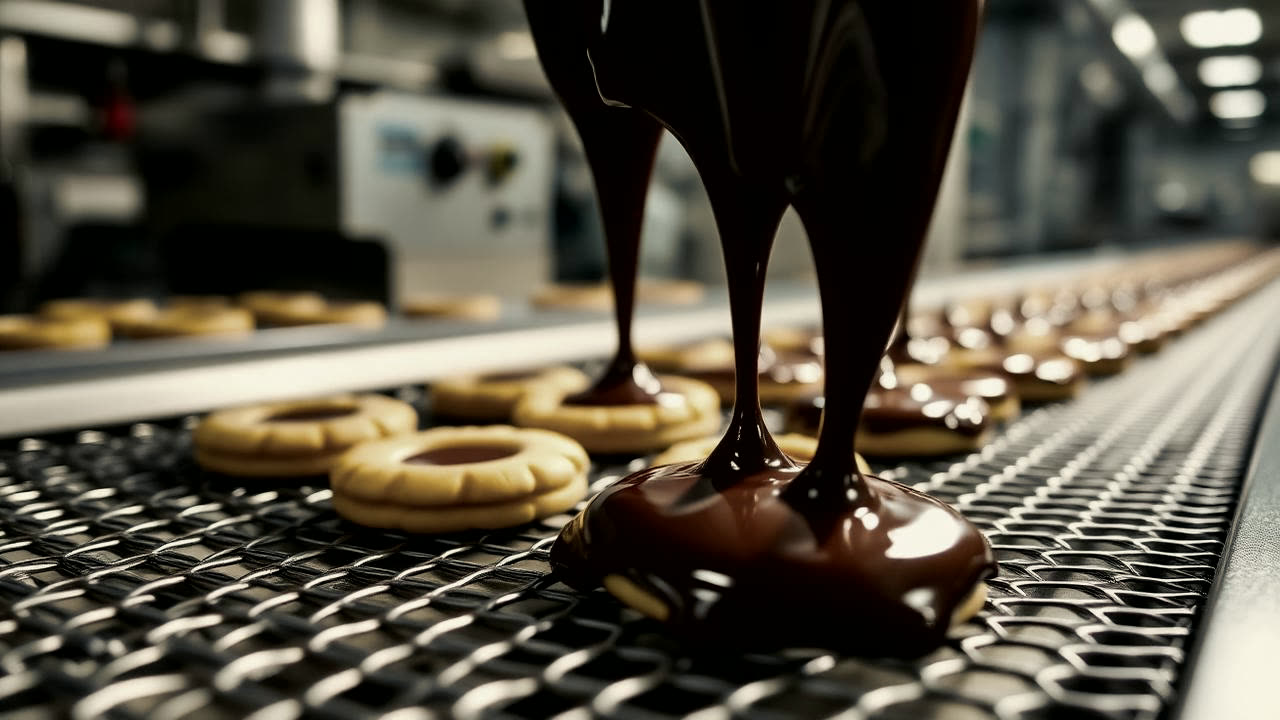
Tempered chocolate is either deposited into moulds for a solid bar or used to enrobe a wafer/biscuit centre as it passes along a cooling tunnel.
Inclusion addition
Nuts, crisped cereal or fruit pieces are added either into the mould before chocolate deposit or on top before the enrober's cooling tunnel sets the surface.
Cooling tunnel
Bars pass through a cooling tunnel at controlled temperature and humidity to set the chocolate without inducing bloom or condensation.
Wrapping and QC release
Bars are checked for gloss, snap and surface bloom before wrapping and cartoning for dispatch.
What drives the cost
raises cost
Cocoa content and type
Higher cocoa percentage and couverture (real cocoa butter) chocolate cost more than compound chocolate made with vegetable fat substitutes.
raises cost
Inclusions
Nuts, freeze-dried fruit or crisped cereal pieces raise ingredient cost and may need separate dosing or pre-treatment steps.
depends
Tempering precision
Tighter tempering control reduces bloom risk over shelf life but needs more skilled line operation and quality checks.
raises cost
Mould complexity
Custom bar shapes or segment patterns need dedicated moulds, adding tooling cost that's amortised over the order.
lowers cost
Batch size
Larger continuous enrobing or moulding runs reduce changeover and cleaning cost per bar.
raises cost
Climate-controlled storage
Cool, dry storage through the supply chain adds cost but is necessary to prevent bloom and softening in transit.
Common mistakes first-time brands make
Underestimating tempering sensitivity
Even small deviations in the tempering curve cause fat bloom (a dull, streaky surface) that shows up weeks after packing, not immediately.
Ignoring climate control in distribution
Bars that leave a well-controlled factory but travel through a non-climate-controlled supply chain can soften or bloom before reaching the shelf.
Choosing compound chocolate for a premium positioning
Compound chocolate is more heat-stable and cheaper but lacks the mouthfeel buyers expect from a premium couverture bar; the choice should match the brand position upfront.
Underplanning inclusion distribution
Inclusions added without proper dosing calibration can cluster unevenly, leading to inconsistent bite and bar weight.
Choosing a manufacturer for chocolate bars
Tempering and enrobing capability
Confirm the plant has a validated tempering machine and enrober suited to your cocoa content and bar format.
Certifications
FSSAI licence is mandatory; FSSC 22000 or ISO 22000 certification is a good signal of consistent hygiene and process control for chocolate.
Capacity and cold storage
Ask about the plant's climate-controlled storage and whether it extends through dispatch, since chocolate is sensitive to heat exposure after production.
Sampling process
Request a sample bar stored at ambient temperature for a couple of weeks to check for bloom before approving the recipe.
Frequently asked questions
- What's the difference between couverture and compound chocolate for manufacturing?
- Couverture uses real cocoa butter and needs precise tempering, giving better snap and mouthfeel, while compound chocolate uses a vegetable fat substitute that's more heat-stable and cheaper but has a different melt profile.
- Why does chocolate bloom and how is it prevented?
- Bloom is a dull, streaky surface caused by unstable cocoa butter crystals or moisture; it's prevented through accurate tempering and consistent climate-controlled storage after production.
- Can I add nuts or fruit inclusions to a standard bar recipe?
- Yes, most enrobing or moulding lines can dose inclusions, though distribution needs to be calibrated for even bite and consistent bar weight.
- How long does a chocolate bar last on the shelf?
- Couverture bars typically hold for 9–12 months and compound chocolate bars for 12–18 months, both requiring cool, dry storage away from direct heat.
- Is cold-chain distribution mandatory for chocolate bars?
- It isn't a formal legal requirement everywhere in India, but climate-controlled transport and storage are strongly recommended to prevent melting, softening and bloom before the product reaches the shelf.
How BrandForge helps
BrandForge matches your chocolate bar brief double-blind to manufacturers with tempering and enrobing lines suited to your cocoa content and inclusion plan, cutting down trial-and-error on bloom and snap. A success manager stays engaged after both sides approve the match, right through the first climate-stability check on the shelf sample.