Manufacturing guide · Food
Spice blends contract manufacturing in India
Spice blends typically run at an MOQ of 5,000–20,000 packs of 100 g (500–2,000 kg finished blend before packing losses), with ex-factory cost of ₹20–55 per 100 g depending on spice mix complexity and whether whole spices are roasted and ground in-house. Lead time is usually 6–8 weeks from recipe finalisation to first batch, and an FSSAI licence plus controls on heavy-metal and microbial limits are the baseline requirements. Grind particle size and moisture control at the mill stage have the biggest influence on shelf flavour retention.
Key facts
| Typical MOQ | 5,000–20,000 packs of 100 g (500–2,000 kg finished blend before packing losses) |
|---|---|
| Typical pack sizes | 50 g, 100 g pouch; 250 g, 1 kg bulk/catering pack |
| Indicative cost per unit | ₹20–55 per 100 g pack, ex-factory |
| What the cost covers | Ex-factory: whole spice procurement, roasting, grinding and primary pouch included; excludes GST, freight, outer cartons, brand margin |
| Lead time, brief to first batch | 6–8 weeks from recipe finalisation to first batch |
| Key licences and certifications | FSSAI licence; product must meet applicable FSSAI category standards; Legal Metrology labelling for pre-packaged goods |
| Typical shelf life | 9–12 months in laminated pouch, away from moisture and light |
| Common formats | Whole spice blends, ground masala powder, roasted and tempering mixes |
How it is made
Spice sourcing and cleaning
Whole spices are sourced to a defined grade and passed through destoning and cleaning to remove foreign matter before processing.
Roasting
Select spices are dry-roasted in batches to develop aroma; roast time and temperature are controlled to avoid scorching, which flattens flavour.
Grinding
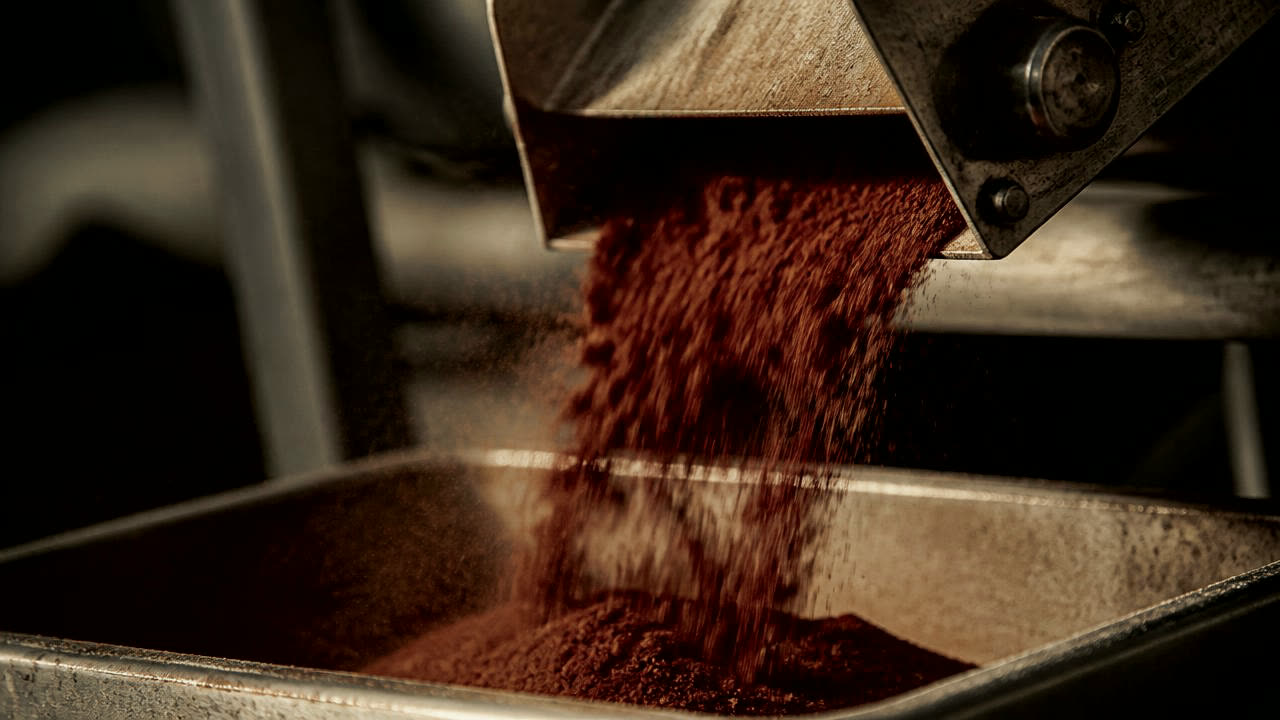
Roasted and raw spices are ground together in a steel mill to the target particle size, with temperature monitored to limit volatile oil loss during milling.
Blending
Ground components are blended in a ribbon or paddle mixer to a validated recipe ratio, with trial batches checked for uniformity.
Sieving and metal check
Blended powder passes through a sieve and metal detector before packing to remove oversize particles and contamination.
Packing and QC release
Moisture content, particle size and microbial counts are checked before the batch is released and packed into moisture-barrier pouches.
What drives the cost
raises cost
Spice sourcing grade
Higher-grade whole spices with consistent oil content cost more but give more stable flavour batch to batch.
raises cost
Number of ingredients
Complex blends with 10+ spices need more dosing accuracy and raise formulation and QC cost.
depends
Grind fineness
Finer grinds need slower milling to control heat buildup, which can lower throughput and raise per-kg cost.
raises cost
Roasting step
An additional roasting stage before grinding adds energy and time cost but improves aroma retention.
lowers cost
Batch size
Larger raw batches reduce the share of mill cleaning and changeover cost per kilogram.
raises cost
Pouch barrier
Moisture-barrier laminate pouches cost more than plain polypropylene but protect volatile oils for longer.
Common mistakes first-time brands make
Overlooking heavy-metal testing
Spices sourced without traceability can carry elevated heavy-metal levels, so batch-wise testing should be built into the release process, not treated as optional.
Ignoring mill heat buildup
Fine grinding at high speed can heat the spice enough to drive off volatile oils, dulling flavour before the pack is even sealed.
Underestimating moisture sensitivity
Ground spice packed without adequate moisture barrier clumps and loses pungency well before the stated shelf life.
Skipping blend uniformity checks
Without a validated mixing time, a blend can separate by particle density, giving inconsistent flavour pack to pack.
Choosing a manufacturer for spice blends
Grinding and blending capability
Confirm the plant has both roasting and fine-grinding equipment suited to your recipe, not just a generic masala mill.
Certifications
FSSAI licence is mandatory; ISO 22000 or HACCP certification indicates tighter control over contamination and adulteration risk.
Capacity and batch minimums
Ask about minimum raw batch size in kilograms, since spice mills often size production around batch weight rather than pack count.
Sampling process
Request a production-scale sample batch and check particle size and aroma, since lab-scale grinding often behaves differently from mill-scale.
Frequently asked questions
- Can I get a custom spice blend made to my own recipe?
- Yes, most spice manufacturers will formulate to your recipe and run a small trial batch for sign-off before scaling to a full production run.
- Why do spice blends need heavy-metal testing?
- Spices absorb trace heavy metals from soil and processing, so batch-wise testing is a standard quality control step rather than an optional add-on.
- Does roasting affect the cost?
- Yes, an added roasting stage increases energy and processing time cost but is often used to build a more rounded flavour profile.
- How is shelf life maintained in powdered spice?
- Shelf life depends mainly on moisture control during grinding and a moisture-barrier pouch; well-controlled blends hold flavour for 9–12 months.
- What licence do I need to sell packaged spice blends?
- An FSSAI manufacturing licence is required, and Legal Metrology rules govern the net-weight declaration on the pack.
How BrandForge helps
BrandForge matches your spice blend brief double-blind to manufacturers with the right mill and roasting setup for your recipe complexity, so flavour trials start sooner. After both sides approve and names are shared, a success manager helps you track particle size and aroma consistency across the first few batches.