Manufacturing guide · Nutraceuticals
Protein bars contract manufacturing in India
Protein bars are generally contract manufactured at a 5,000–10,000 unit MOQ, costing ₹25–45 ex-factory per 60 g bar depending on protein inclusion level and coating. First batch typically takes 8–14 weeks from brief, with an FSSAI licence and a forming-and-cutting line being the key production requirement.
Key facts
| Typical MOQ | 5,000–10,000 units per SKU (often tied to a minimum mix-batch size) |
|---|---|
| Typical pack sizes | 40–70 g single bars, multi-bar cartons of 6 or 12 for retail |
| Indicative cost per unit | ₹25–45 ex-factory for a 60 g bar |
| What the cost covers | Ex-factory: protein base, binder/syrup system, inclusions (nuts, chocolate chips), coating, flow-wrap film and printing included; excludes GST, freight, outer cartons, brand margin |
| Lead time, brief to first batch | 8–14 weeks from brief to first batch (longer if a coating line is needed) |
| Key licences and certifications | FSSAI licence; product must comply with the FSS (Health Supplements, Nutraceuticals, Food for Special Dietary Use, Food for Special Medical Purpose, Functional Food and Novel Food) Regulations; Legal Metrology labelling for pre-packaged goods |
| Typical shelf life | 9–12 months at ambient storage, shorter if the bar has a high moisture or fruit-paste content |
| Common formats | Baked bar, cold-formed/compressed bar, or coated bar with chocolate or yoghurt coating |
How it is made
Binder-syrup cooking
A sugar, glucose or honey-based syrup is cooked to a target brix and moisture level that will hold the bar's chew and shelf stability.
Dry-ingredient mixing
Protein crisps, nuts, oats and other inclusions are blended into the syrup in a ribbon or planetary mixer to form a uniform dough.
Sheeting and forming
The dough is sheeted to a set thickness on a continuous forming line, then rolled or pressed to the target bar density.
Slab cutting
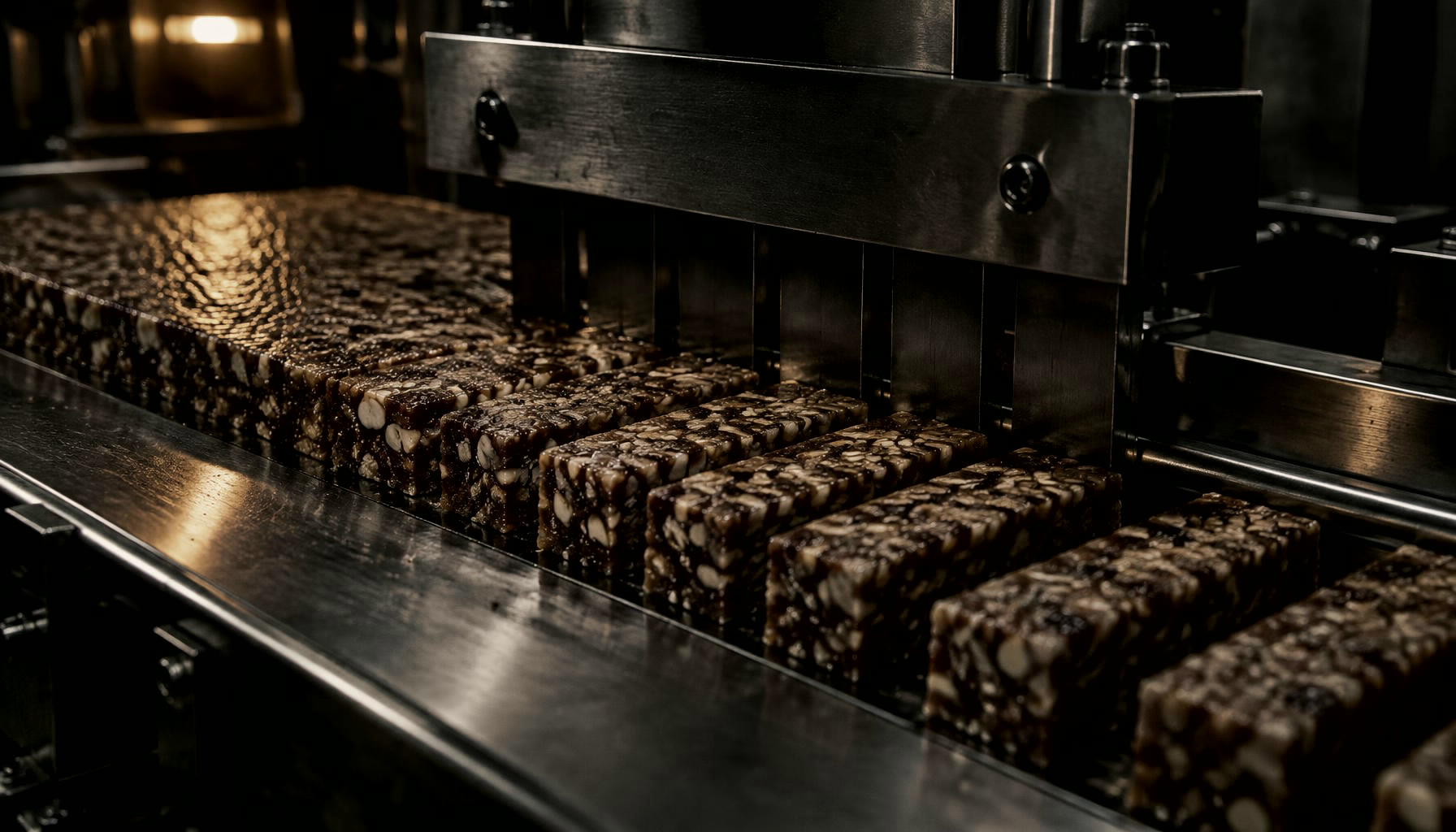
The sheeted slab is guillotine- or wire-cut into individual bars on a steel cutting line, with trim scrap recycled back into the mix.
Coating (if applicable)
Bars pass through an enrober for chocolate or yoghurt coating, then through a cooling tunnel to set the coating before wrapping.
Flow-wrapping and cartoning
Bars are flow-wrapped on a horizontal form-fill-seal machine, date-coded, and packed into shipper cartons.
What drives the cost
raises cost
Protein inclusion level
Bars formulated above 20 g protein per 60 g need more protein crisp or isolate inclusion, which raises raw-material cost noticeably.
raises cost
Chocolate or yoghurt coating
Enrobing adds both ingredient cost and a dedicated cooling-tunnel step to the line.
depends
Bar density and binder type
Honey or syrup-based binders cost more than basic glucose syrup but often give a softer, more consistent chew.
lowers cost
Batch size per SKU
Running a single flavour at higher volume reduces changeover time on the forming and cutting line.
raises cost
Shelf-life target
Extending shelf life beyond 9 months typically needs moisture-barrier film upgrades, which add to packaging cost.
Common mistakes first-time brands make
Underestimating moisture migration
Bars with soft fillings or fruit pastes can dry out or go sticky if the flow-wrap film isn't a proper moisture barrier; always test shelf samples at accelerated conditions.
Skipping cutting-line trial
A dough that sheets well can still crumble when cut; request a cutting trial before committing to a full production run.
Not accounting for coating cooling-tunnel time
Coated bars take longer per batch because of the cooling-tunnel step; factor this into your lead-time expectations.
Choosing a manufacturer for protein bars
Capabilities
Check whether the line can both sheet-and-cut and, if needed, enrobe — not every bar manufacturer runs a coating line.
Certifications
FSSAI licence is essential; GMP certification is a useful signal for allergen control on nut- and dairy-heavy formulations.
Capacity
Confirm the forming line's daily output against your order size so a 5,000-unit order isn't queued behind larger brand runs.
Sampling
Ask for a cut-and-wrap sample batch to check texture, cut edges and wrap seal before signing off on production.
Frequently asked questions
- What is a typical MOQ for a protein bar launch?
- Most manufacturers set MOQ around 5,000–10,000 units per flavour, tied to the minimum batch size their mixer and forming line need to run efficiently.
- Does a chocolate coating add much to lead time?
- Yes, coated bars need an enrobing and cooling-tunnel pass, which can add roughly a week to the production schedule versus an uncoated bar.
- How is shelf life protected without preservatives?
- Shelf life mainly comes from controlling the syrup's water activity and using a proper moisture-barrier flow-wrap film rather than from added preservatives.
- Can I formulate a vegan protein bar?
- Yes, pea or soy protein crisps can replace whey-based crisps, though the binder system may need adjusting for texture.
- What licence should I check for the manufacturer?
- An FSSAI licence is the baseline; GMP certification is worth checking given the nut and dairy allergens typical on a bar line.
How BrandForge helps
BrandForge reviews your bar brief for protein level, coating and shelf-life target, then matches it double-blind to manufacturers with the right forming or enrobing capability. Once both sides approve the match, a success manager tracks you through the cutting-line trial to first commercial batch.