Manufacturing guide · Home care
Laundry detergent (liquid and powder) contract manufacturing in India
Laundry detergent contract manufacturing in India covers both liquid and powder formats, with MOQs typically 5,000–20,000 units; a 1 L liquid runs roughly ₹45–90 and a 1 kg powder pack ₹30–65. Lead time is usually 6–10 weeks from approved formulation to first batch. No cosmetic licence applies; the checks to run are Legal Metrology labelling, any BIS standard relevant to the specific detergent composition, and the manufacturing site's own state pollution control consent.
Key facts
| Typical MOQ | 5,000–20,000 units per format |
|---|---|
| Typical pack sizes | Liquid: 500 ml, 1 L, 2 L; Powder: 500 g, 1 kg, bulk sacks |
| Indicative cost per unit | ₹45–90 per 1 L liquid; ₹30–65 per 1 kg powder |
| What the cost covers | Ex-factory: surfactant/enzyme/builder system, bottle or pouch/carton, and filling or packing included; excludes GST, freight, shipper cartons, brand margin |
| Lead time, brief to first batch | 6–10 weeks from approved formulation to first batch |
| Key licences and certifications | General trade and pollution-control approvals for the plant; check whether a mandatory BIS standard applies to your specific product; Legal Metrology labelling for pre-packaged goods |
| Typical shelf life | 18–24 months (liquid); 24 months (powder, moisture-sensitive) |
| Common formats | Liquid pour bottle, liquid pouch refill, powder carton, powder bulk drum for institutional packs |
How it is made
Liquid blending or powder mixing
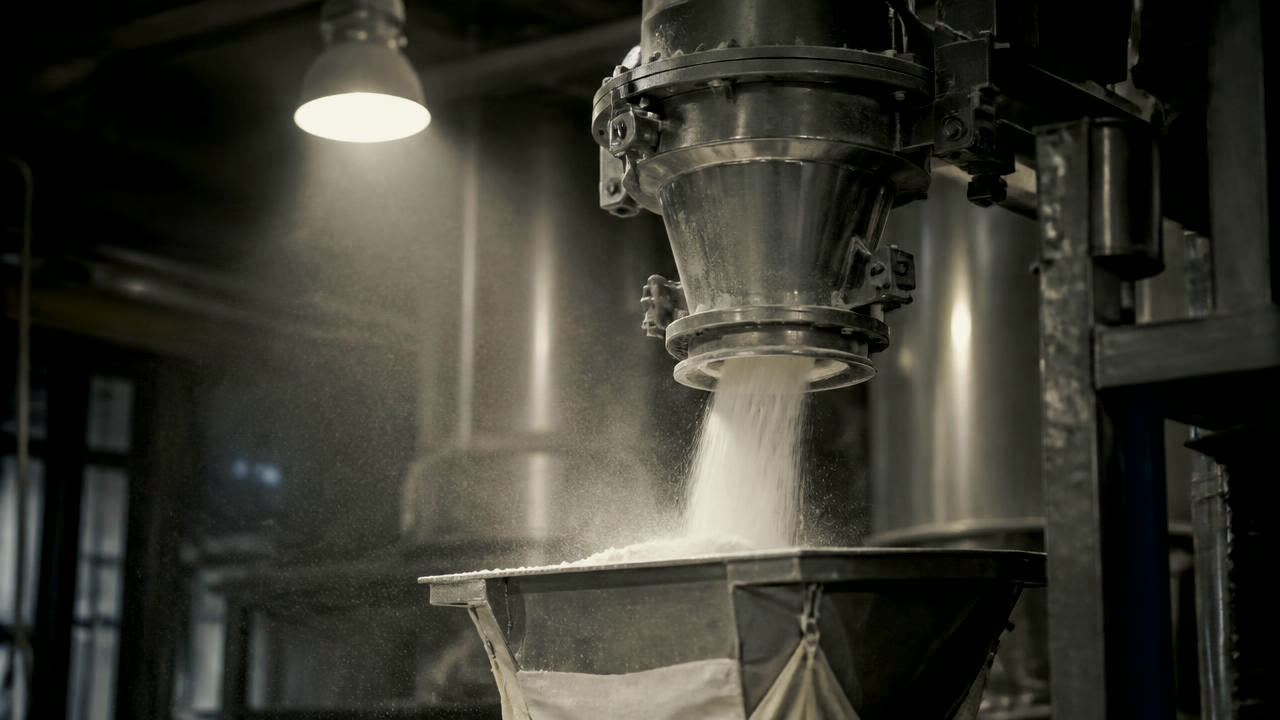
For liquid, surfactants, builders, enzymes and fragrance are blended in sequence in a jacketed vessel; for powder, spray-dried or dry-blended bases, builders and brighteners are mixed in a ribbon or drum blender to even distribution.
Enzyme and brightener addition
Heat-sensitive enzymes and optical brighteners are added only after the base cools or at the final dry-blend stage, since excess heat or moisture can deactivate them.
In-process testing
Liquid batches are checked for viscosity, pH and clarity; powder batches are checked for bulk density, moisture content and blend uniformity before release.
Filling or bulk packing
Liquid is filled into bottles or pouches on a volumetric line; powder is packed into cartons, sachets, or for bulk/institutional orders, into drums or multi-layer sacks on a weigh-fill line.
Labelling and batch coding
Packs carry MRP, net quantity, batch code and manufacturer details per Legal Metrology requirements, then move to cartoning and dispatch.
What drives the cost
raises cost
Enzyme and brightener inclusion
Adding enzymes or optical brighteners to either format increases raw material cost over a basic surfactant-builder formulation.
depends
Liquid vs powder base
Powder avoids water-weight freight cost but needs spray-drying or blending infrastructure; liquid needs no drying step but costs more to ship per wash dose.
lowers cost
Bulk/drum packing for institutional orders
Packing into bulk drums or sacks instead of retail cartons cuts packaging cost per kg significantly for institutional or B2B orders.
raises cost
Fragrance and colour granule inclusion
Coloured speckles or premium fragrance encapsulation in powder formulations add a distinct cost line over plain white powder.
lowers cost
Batch size
Larger blending or mixing runs spread vessel/blender changeover time over more units, lowering cost per kg or per bottle.
Common mistakes first-time brands make
Underestimating moisture control for powder
Powder detergent is hygroscopic; poor packing-line humidity control leads to caking in the pack, which is a common and avoidable complaint.
Assuming liquid and powder need the same facility checks
Powder blending and liquid mixing are different processes with different equipment and moisture-control needs; confirm the manufacturer actually runs both, not just one.
Skipping BIS standard checks for the composition
Some detergent compositions fall under specific BIS standards; it's worth confirming with the manufacturer which apply before finalising the formulation.
Choosing a manufacturer for laundry detergent (liquid and powder)
Liquid and powder line capability
Confirm whether the manufacturer runs dedicated lines for both formats or only one, especially if you plan to launch both.
Relevant standards and labelling awareness
Check the manufacturer tracks applicable BIS standards for the detergent type and gets Legal Metrology labelling right by default.
Pilot batch for enzyme/brightener stability
Request a pilot batch with stability data if your formulation includes enzymes or brighteners, since these are more failure-prone over shelf life.
Frequently asked questions
- Is powder detergent cheaper to manufacture than liquid?
- Powder is often cheaper per kg of active ingredient since it avoids water dilution, but liquid formats can offer easier dosing and premium positioning; the right choice depends on your target price point and freight considerations.
- Do laundry detergents need BIS certification?
- Some detergent compositions fall under specific BIS standards, so it's best to confirm with your manufacturer whether your formulation needs to comply.
- What causes powder detergent to cake in the pack?
- Moisture ingress during packing or storage is the usual cause; good humidity control on the packing line and a moisture-barrier pack reduce this risk.
- Can I order both liquid and powder from the same manufacturer?
- Some manufacturers run both liquid and powder lines, but many specialise in one; it's worth confirming capability for both formats upfront if you plan a dual launch.
- What pollution control checks apply to detergent manufacturing?
- The manufacturing site should hold a current state pollution control board consent, since both liquid blending and powder production involve effluent or emission management; this is a factory-level check, not a brand-level one.
How BrandForge helps
BrandForge matches your liquid or powder detergent brief against manufacturers with the matching blending, drying or packing capability, with partner identities revealed only after mutual approval. A success manager then supports pilot batch review and labelling checks through to first production run.